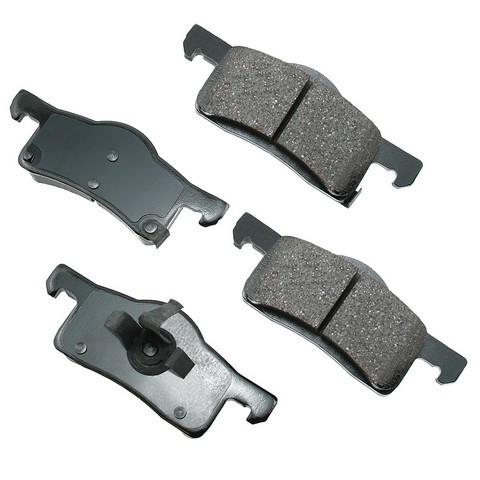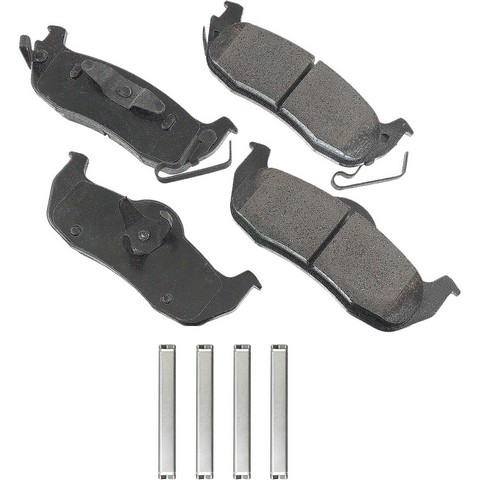
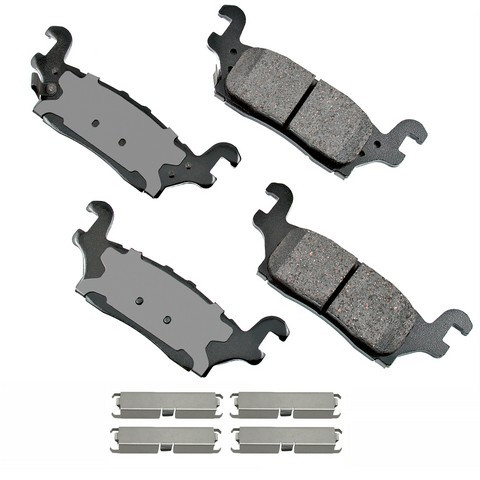
Akebono ProACT Disc Brake Pad Set P/N:ACT1120
Get stops engineered for NVH control with the Akebono ProACT ceramic brake pads (ACT1041), a rear disc brake pad set built on OE-validated, application-specific ceramic friction. It's a direct-fit replacement for many vehicles, among them the 2005-2015 Nissan Armada, 2004-2015 Nissan Titan and 2004-2010 Infiniti QX56 — see the Buyer's Guide tab for the full list and engine-level fitment.
This set replaces the rear brake pads on the listed applications. For even, balanced braking, it's best practice to service both wheels on the axle together and to inspect the rotors at the same time. If worn rear pads are behind squealing, reduced bite, or a brake-wear warning, this set replaces them.
This part cross-references / interchanges with the following part numbers:
Are these Akebono ProACT ultra premium ceramic brake pads front or rear?
This ACT1041 set is cataloged as a rear disc brake pad set. It fits the rear axle on the listed applications; see the Buyer's Guide tab for details.
What vehicles do these Akebono ProACT ceramic pads fit?
They're a direct-fit rear replacement for many vehicles, among them the 2005-2015 Nissan Armada, 2004-2015 Nissan Titan and 2004-2010 Infiniti QX56. Check the Buyer's Guide tab for the full list and engine-level fitment.
What makes these Akebono ProACT ultra premium brake pads different?
They use an OE-validated, application-specific ceramic formulation with precision-cut pressure plates and engineered chamfers and slots for optimal braking performance and NVH control.
Are these pads designed with noise control in mind?
Yes. Akebono designs them with precision-cut pressure plates and engineered chamfers and slots for NVH (noise, vibration and harshness) control.
Should I replace both sides at once?
For even, balanced braking it's best practice to service both wheels on the axle together as a matched pair and to inspect the rotors while you're in there.
WARNING: These products can expose you to chemicals including lead and phthalates, which are known to the State of California to cause cancer and birth defects or other reproductive harm. For more information go to www.P65Warnings.ca.gov.