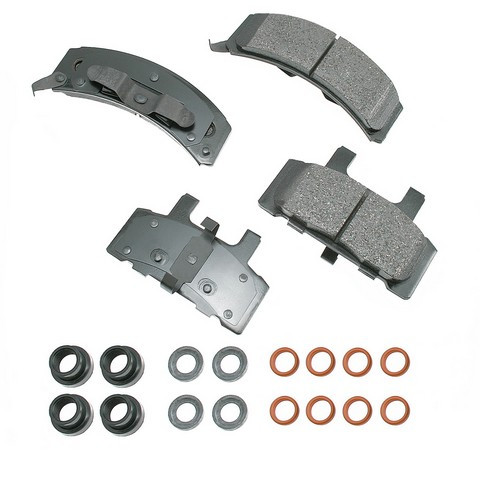
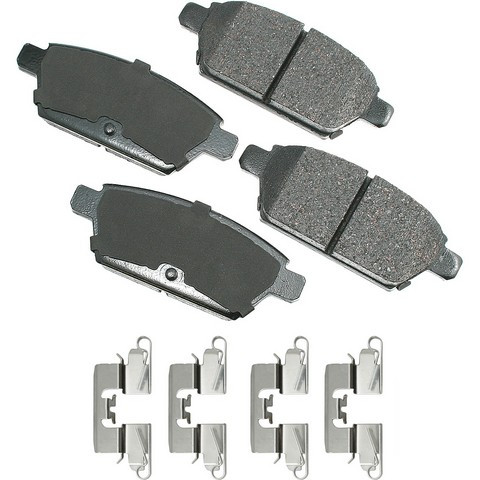
Akebono ProACT ACT1284A rear brake pad for the 2006-2012 Kia Sedona and other vehicles is an ultra-premium ceramic set from the Akebono ProACT brake pads line, made for rear disc brakes.
- Akebono ProACT ceramic brake pads use OE-validated, application-specific formulations.
- Akebono ProACT ultra premium ceramic brake pads have precision-cut pressure plates.
- These Akebono ProACT ceramic pads have scientifically engineered chamfers and slots for braking performance and NVH control.
- Akebono originated ceramic brake technology and is the original equipment brand installed, in-total on more than 400 models.
Grinding, squealing or a longer pedal travel can mean the rear pads are worn. Before you replace them, look at the pad thickness and the rotor surface during the brake service, with the engine off, because a sticking caliper can wear pads unevenly too. The 2006-2012 Kia Sedona takes one set.
Besides the 2006-2012 Kia Sedona, this is a direct-fit replacement for the 2010-2016 Hyundai Genesis Coupe and the 2009-2011 Kia Borrego, among many other Kia and Hyundai models. If your car isn't named here, look it up on the Buyer's Guide tab before you order.
Specifications
Fit and size
- Position: rear
- Quantity per vehicle: 1 set
Build and materials
- Friction material: ceramic
- Friction material attachment: integrally molded
- Pad wear sensor type: mechanical
- Country of origin: United States
In the box
Brake pad set with a pad wear sensor and abutment clips. Brake lubricant is not included.
Interchange / FMSI:
FMSI: 8401-D1284 · 8496-D1387 · 8575-D1439 · 8524-D1284
This part cross-references / interchanges with the following part numbers:
8401-D1284, 8496-D1387, 8575-D1439, 8524-D1284