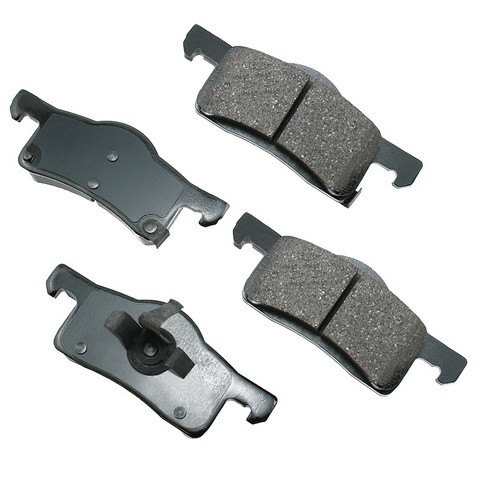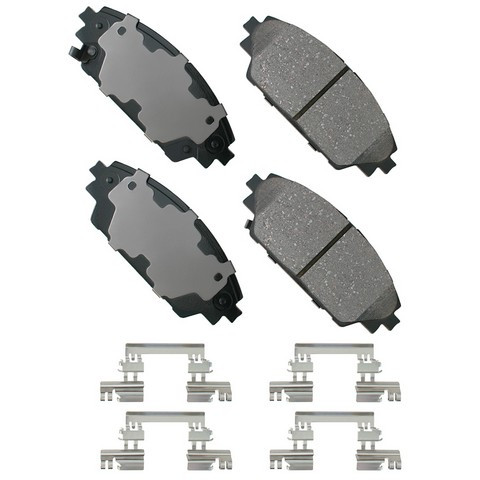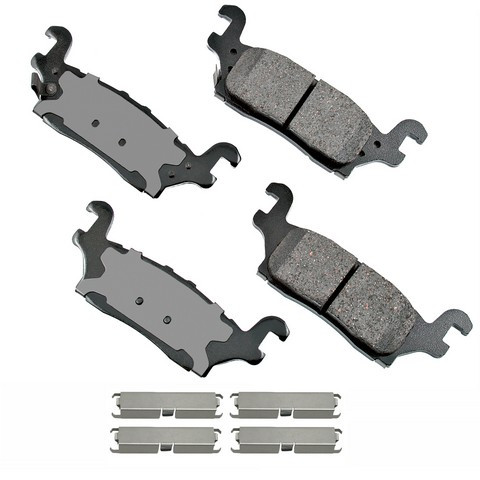
Akebono ProACT Disc Brake Pad Set P/N:ACT1120
Akebono ProACT ACT1593 front brake pad for the 2011-2017 Kia Rio and other vehicles is designed for braking performance and for control of noise, vibration and harshness (NVH).
Worn front pads can mean squealing or grinding under braking, longer stops or a car that pulls to one side. Grooved or warped rotors and a sticking caliper can make similar noise and pulling, so pin down the source before you order. If worn pads are the cause, this set replaces them.
These pads fit the 2011-2017 Kia Rio and the 2011-2017 Hyundai Accent.
Interchange / FMSI:
FMSI: 8806-D1593 · D1593
Interchange: 58101-1RA00 · 58101-1RA01 · 58101-1RA10 · 17-1593 · 21-1593 · CFC1593 · SBC1593 · SCD1593 · BC1593 · AD8806 · EHT1593H · MGD1593CH · SGD1593C · TPC1593
Product information is for general reference and may contain errors. See our Disclaimer.
This part cross-references / interchanges with the following part numbers:
Are Akebono ProACT ceramic brake pads OE-validated?
Yes, Akebono ProACT ACT1593 uses OE-validated, application-specific ceramic formulations. Its pressure plates are precision-cut.
How do Akebono ProACT brake pads handle brake noise?
This front brake pad has chamfers and slots engineered for braking performance and NVH control, meaning noise, vibration and harshness.
Is ACT1593 a 2011-2017 Kia Rio brake pad, and does it fit the 2011-2017 Hyundai Accent too?
Yes, Akebono ProACT ACT1593 front brake pad fits both the 2011-2017 Kia Rio and the 2011-2017 Hyundai Accent.
How can I tell these front ceramic pads are worn out?
Squealing, grinding or longer stopping distances can mean the pads are worn. A shop can measure the pad material that remains.
Does this disc brake pad set replace 58101-1RA00?
Yes, Akebono ProACT ACT1593 replaces 58101-1RA00, along with 58101-1RA01, 17-1593 and CFC1593, among other numbers on the Interchange line.
No reviews yet — be the first to review this product.
Write a Review
WARNING: These products can expose you to chemicals including lead and phthalates, which are known to the State of California to cause cancer and birth defects or other reproductive harm. For more information go to www.P65Warnings.ca.gov.