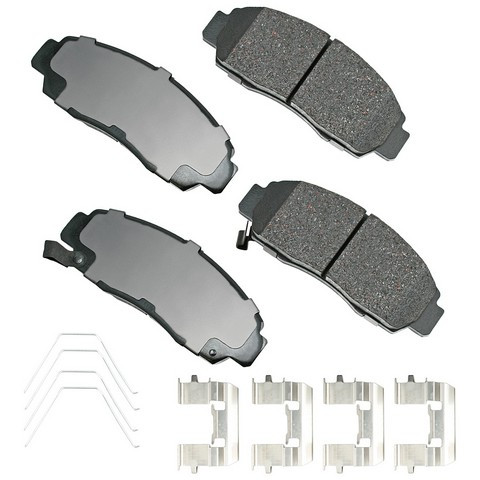
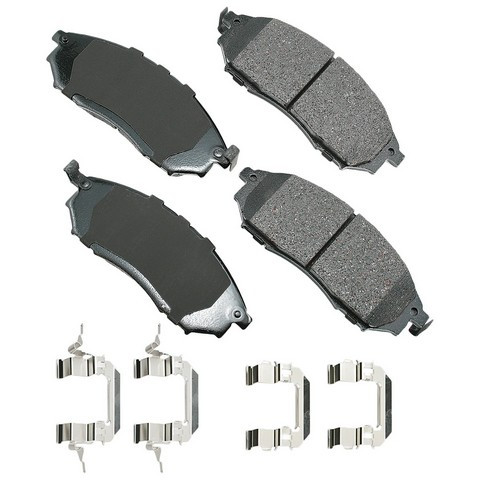
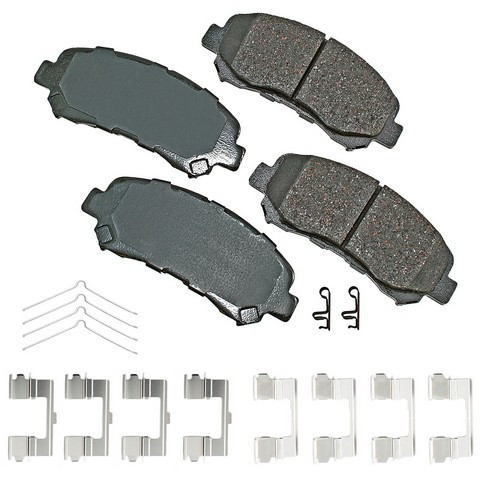
Engineered with noise, vibration and harshness control in mind, the Akebono ProACT ACT787A is an ultra-premium front disc brake pad set built on OE-validated, application-specific ceramic formulations. It is a direct-fit replacement for many vehicles, among them the 2003-2012 Honda Accord, 2004-2014 Acura TSX and 2006-2011 Acura CSX. See the Buyer's Guide tab for the full list and engine details.
- Ceramic formulations: OE-validated and application-specific, matched to the listed applications.
- Precision-cut pressure plates: part of the pad design Akebono uses for braking performance and NVH control.
- Engineered chamfers and slots: scientifically engineered to support braking performance and help control noise, vibration and harshness.
- Front position: cataloged as front brake pads for the listed applications.
Akebono Brake Corporation describes itself as the originator of ceramic brake technology and an original equipment brand of choice with automakers. It is a leading North American supplier of advanced brake technology, focused on brake and friction material development and on NVH analysis and control. The Akebono Group runs technical and R&D centers in Japan, the United States and France, with wholly owned and affiliated manufacturing facilities worldwide.
Brake pads wear gradually as they press against the rotors to slow the vehicle. Signs that front pads may need replacing include squealing or grinding when braking, longer stopping distances, or friction material worn thin on inspection. Inspect the rotors whenever new pads go on, and follow the vehicle service information for installation and break-in.
This part cross-references / interchanges with the following part numbers:
7656-D787, 7857-D959, 7656-D1506, 8392-D1276, 8392-D1608