


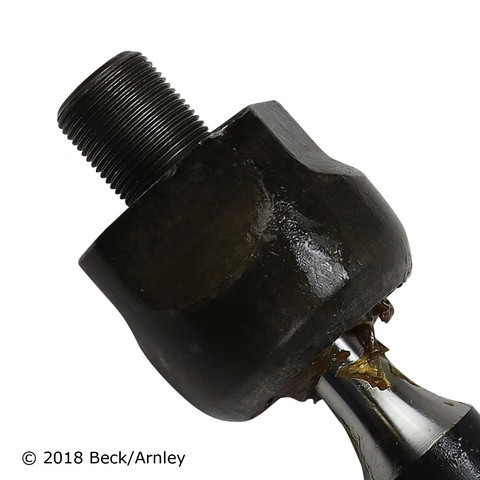


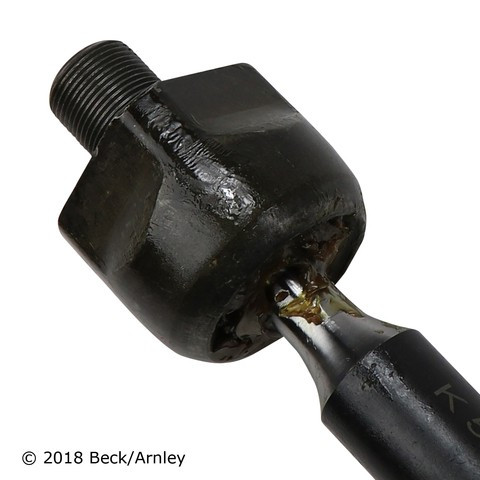
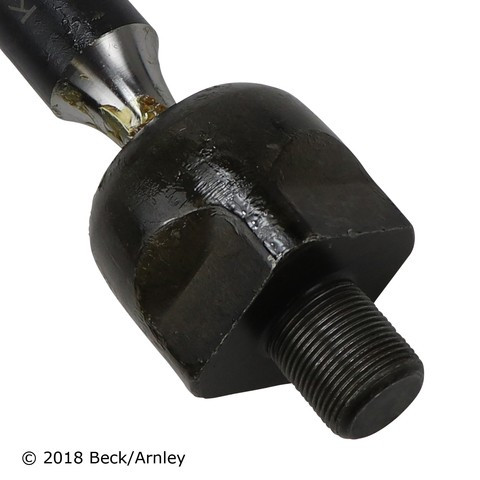

Keep your steering tight and predictable with the Beck/Arnley tie rod end 101-7859, a front inner tie rod end that forms part of the steering linkage and transfers your steering input to the wheels. It's a direct-fit replacement for the 2011-2017 Nissan Quest.
Designed to match OE form, fit, and function, this front inner tie rod end helps restore precise steering and even tire wear when the original has developed play. Signs a tie rod end may need replacing include loose or wandering steering, clunking over the front end, uneven or accelerated tire wear, and a knocking felt through the wheel when turning.
- Matches OE form, fit and function for a direct replacement on the listed application.
- Coated or plated for corrosion protection.
- Pre-greased ball joint ready to install.
- Easy-access wrench flat lets you use a socket for straightforward installation and removal.
- Full ball stud for a solid steering connection.
Tie rod ends often wear as a left/right pair; inspect and replace both sides as directed by the service procedure for balanced steering, and have the alignment set afterward.
Interchange: D85211JA0A · D8E211JA0A · TI69010 · EV801340 · ES4942E
This part cross-references / interchanges with the following part numbers:
Frequently Asked Questions
Is this the right tie rod end for a 2011-2017 Nissan Quest?
Yes. It's a direct-fit replacement for the 2011-2017 Nissan Quest. See the "Vehicles it fits" section for the full fitment details.
Is this steering tie rod end a front inner unit?
Yes. This Beck/Arnley 101-7859 is cataloged as a front inner tie rod end, part of the steering linkage that transfers steering input to the wheels.
What are the signs a tie rod end needs replacing?
Loose or wandering steering, clunking over the front end, uneven or fast tire wear, and knocking felt through the wheel when turning. Have the cause diagnosed before replacing.
Does it come pre-greased?
Yes. The ball joint is pre-greased and ready to install, and the part is coated or plated for corrosion protection.
Should I replace both sides and get an alignment?
Tie rod ends often wear as a pair, so inspect both sides and replace as directed by the service procedure. Have a wheel alignment performed afterward.
Reviews
No reviews yet — be the first to review this product.
Write a ReviewWrite a Review