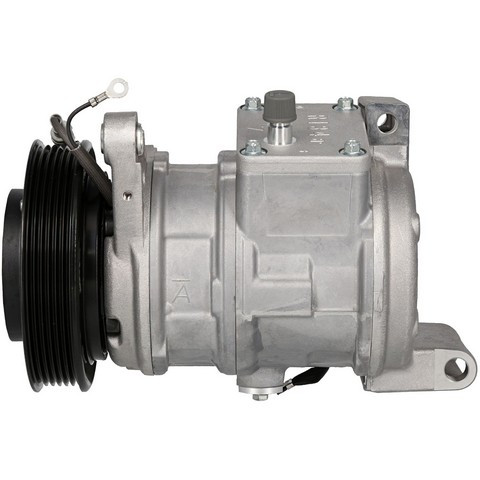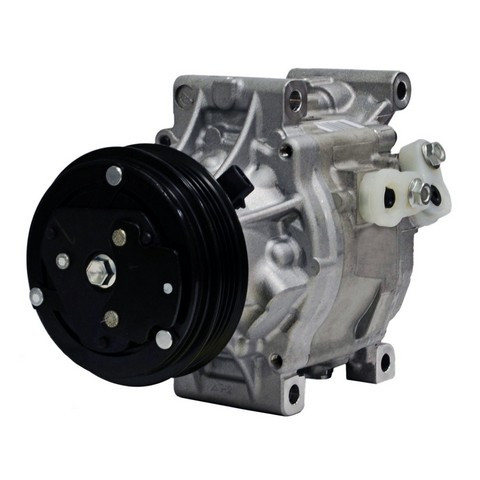
DENSO Auto Parts A/C Compressor P/N:471-1488
Put a factory-new DENSO compressor to work moving refrigerant through your A/C system when your 2016 Hyundai Accent ac compressor needs replacing. The DENSO A/C Compressor 471-6063 is a new compressor supplied with its clutch. It is a direct-fit replacement for the 2012-2017 Hyundai Accent (all engines), and the listed applications use one compressor.
The compressor is the pump of the air-conditioning system. When the clutch engages, the compressor draws in low-pressure refrigerant vapor, compresses it, and sends it on to the condenser. If a worn or seized unit is the reason the A/C compressor in your 2012-2017 Hyundai Accent is not keeping up, this replaces it.
Country of origin: Korea, Republic of.
Interchange: 977011R100
Product information is for general reference and may contain errors. See our Disclaimer.
This part cross-references / interchanges with the following part numbers:
Is this the right 2014 Hyundai Accent ac compressor?
The DENSO 471-6063 is listed for the 2012-2017 Hyundai Accent with all engines, and that range includes the 2014 model year.
Does this compressor come with a clutch?
Yes. DENSO describes the 471-6063 as a new compressor with clutch. The clutch has a maximum diameter of 124.0 mm.
What refrigerant does this compressor use?
It is specified for R134A refrigerant and uses a bolt tangent mounting type.
What are signs an A/C compressor may need replacing?
Signs include warm air from the vents with the A/C on, grinding or squealing from the compressor, a clutch that won't engage, or refrigerant leaking at the unit. Diagnose the system before replacing parts.
What does installing an A/C compressor involve?
The refrigerant is recovered, the compressor is replaced, and the system is evacuated and recharged with R134A. Follow the vehicle service information. Professional A/C service is recommended.
No reviews yet — be the first to review this product.
Write a Review
WARNING: These products can expose you to chemicals including lead and phthalates, which are known to the State of California to cause cancer and birth defects or other reproductive harm. For more information go to www.P65Warnings.ca.gov.