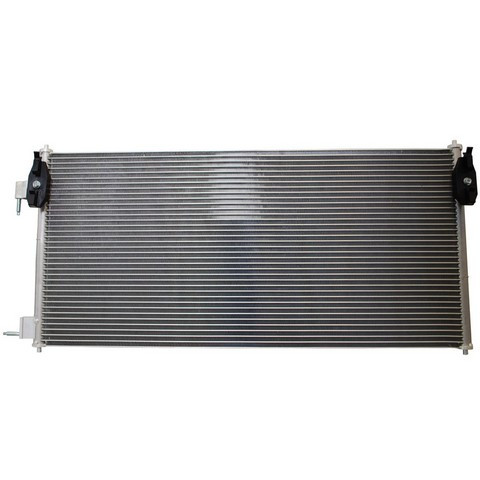
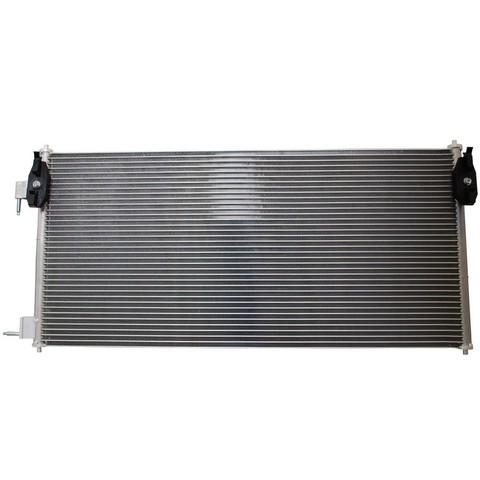
DENSO Auto Parts 477-0826 A/C condenser for the 2010-2013 Ford Transit Connect cools hot refrigerant from the compressor so it condenses back into liquid. It is a DENSO First Time Fit® A/C component of OE quality.
- High-efficiency design that reduces compressor load and boosts heat transfer
- Zinc diffusion layer for added durability
- Advanced fin-and-tube design
- Part of the DENSO First Time Fit® A/C line
- Designed to integrate with the vehicle's air conditioning system
Quick facts
- Part: DENSO Auto Parts 477-0826 A/C condenser
- Fits: 2010-2013 Ford Transit Connect
- Condition: New
Warm air from the vents, oily residue on the condenser or bent, damaged fins can point to a failing condenser. Those signs alone do not prove the condenser is the problem, since a low refrigerant charge can also weaken cooling.
Fits
This condenser fits the 2010-2013 Ford Transit Connect. That vehicle needs one condenser, and this listing is one.
Specifications
- Quantity per vehicle: 1
- Construction: fin-and-tube
- Durability feature: zinc diffusion layer
- Condition: New
- Country of origin: Taiwan
In the box
One A/C condenser. A drier and mounting hardware are not included, so plan on new mounting hardware, since the old pieces may not be reusable.
Product information is for general reference and may contain errors. See our Disclaimer.
This part cross-references / interchanges with the following part numbers:
7013876, 10664, 3876, 9T1Z 19712-A, 31-3876, 7-3876, 1040910
Frequently Asked Questions
Is the DENSO 477-0826 condenser right for a 2010-2013 Ford Transit Connect?
Yes. DENSO Auto Parts 477-0826 is an A/C condenser for the 2010-2013 Ford Transit Connect, and that vehicle needs one condenser.
Does the DENSO 477-0826 condenser come with a drier or mounting hardware?
No. DENSO Auto Parts 477-0826 comes as the condenser alone, without a drier and without mounting hardware, so those are bought separately.
Does this DENSO condenser help reduce compressor load?
Yes. Its high-efficiency design is built to improve heat transfer and full condensation, which lowers the load on the compressor.
What is the zinc diffusion layer on this condenser for?
It is a layer on the condenser that adds durability, and it works alongside the advanced fin-and-tube design.
How can I tell if my A/C condenser is damaged?
With the engine off and cool, look for oily residue, bent fins or visible damage. Weak cooling can also be a sign, and a shop can test the system for leaks.