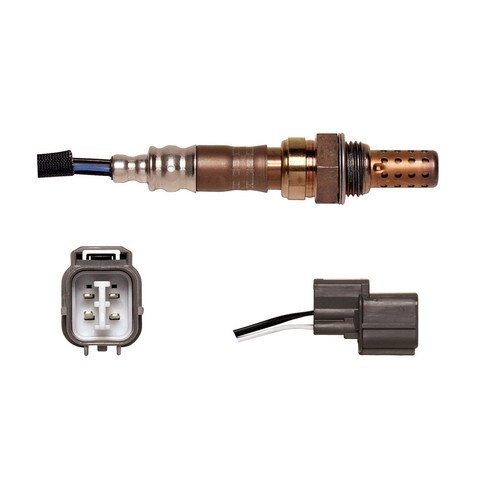
DENSO Auto Parts 234-4093 oxygen sensor for the 1991-2005 Acura NSX V6 3.0L, the 2000-2005 NSX V6 3.2L and other vehicles reads the oxygen in the exhaust gas and sends that signal to the engine computer. The computer uses it to adjust the fuel mixture.
- Laser-welded stainless housing resists corrosion
- PTFE filter blocks contaminants under harsh engine conditions
- Dual-layer protection shields the ceramic element for fast response times
- Aluminum oxide trap layer protects the ceramic element from silicone and lead poisoning
- Heated narrow-band sensor with 4 wires and a 22.83 in wiring harness
Quick facts
- Part: DENSO Auto Parts 234-4093 oxygen sensor
- Fits: 1991-2005 Acura NSX V6 3.0L, the 2000-2005 NSX V6 3.2L and other vehicles
- Position: Upstream left, upstream front, downstream front
- Condition: New
A rough idle, worse fuel economy or a check engine light can mean the sensor is worn. Those signs alone do not prove the sensor is at fault, since a vacuum leak is another common cause. If a worn sensor is the cause, this one replaces it.
Fits
The 1996-2004 Acura RL V6 3.5L and the 1996-1998 Acura TL V6 3.2L also take it, which makes it a direct-fit Acura RL oxygen sensor for that engine. This listing is one sensor, and each sensor position on these cars takes one. If your car is not named here, look it up in the "Vehicles it fits" section.
Specifications
Fit and size
- Position: upstream left, upstream front, downstream front
- Quantity per position: 1
- Thread diameter: 0.708 in
- Wiring harness length: 22.83 in
- Wires: 4, male connector
- Mounting type: threaded
Build and materials
- Sensor type: heated, narrow-band
- Fit: vehicle-specific, direct fit
- Housing: laser-welded stainless
- Condition: New
- Country of origin: United States
Product information is for general reference and may contain errors. See our Disclaimer.
Frequently Asked Questions
Is the DENSO 234-4093 an Acura TL oxygen sensor for the 1996-1998 Acura TL V6 3.2L?
Yes. DENSO Auto Parts 234-4093 is a direct-fit oxygen sensor for the 1996-1998 Acura TL V6 3.2L, and each sensor position takes one.
How long is the wiring harness on this 4-wire DENSO oxygen sensor?
The wiring harness is 22.83 in long. The sensor has a male connector, 4 wires and a threaded mount with a 0.708 in thread diameter.
Is this oxygen sensor heated, and is it narrow-band or wideband?
This sensor is heated and narrow-band, with 4 wires and a threaded mount.
What protects the ceramic element inside the DENSO 234-4093?
DENSO 234-4093 has dual-layer protection around the ceramic element, a PTFE filter against contaminants and an aluminum oxide trap layer against silicone and lead poisoning.
Could a failing oxygen sensor be behind poor fuel economy?
It can be one possible cause. The sensor feeds the engine computer, so a shop can read its signal with a scan tool to see if it is the problem.