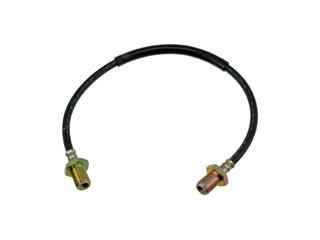
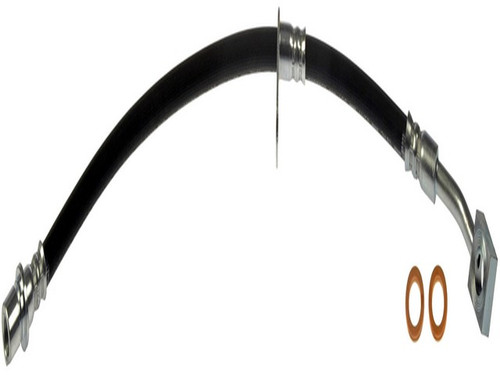
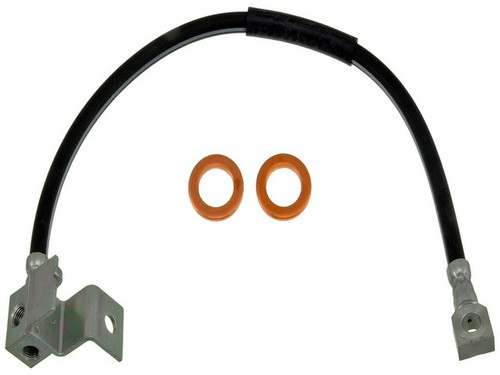
Route brake fluid from the rigid lines to the wheel brakes with the Dorman - First Stop Brake Hydraulic Hose H38320, a Dorman brake hydraulic hose precision-engineered to perform like the original hose on specific vehicles and positions. It fits many vehicles, among them the 1980-1983 Ford C600, 1980-1983 Ford C700 and 1980-1983 Ford C7000. See the Buyer's Guide tab for the full list. It is cataloged for the front left and front right positions, including the front left and front right rear connection.
A brake hose is the flexible link in the hydraulic brake circuit. It carries fluid pressure to the wheel brake while flexing with suspension and steering movement. Dorman builds this replacement for use as part of a complete brake repair:
- Ideal replacement: precision-engineered to perform like the factory brake hose on the specific vehicles it is listed for.
- Position-specific: made to precise measurements for an exact fit and easy installation.
- Quality assured: its materials are tested to exacting government-regulated safety and durability standards.
- Durable design: EPDM rubber hose with specially coated, corrosion-resistant fittings.
If a cracked, swollen or leaking hose is behind a soft pedal or fluid loss, this hose replaces it. Bleed the brake system after installation. Follow the vehicle service information for the installation procedure, including the correct fasteners and whether they may be reused.
Interchange: 150.65053 · 350-54284
15065053 · 35054284 · 18J396 · B917199 · 614267 · 77135 · BH409950 · D5TZ2078T · BH38320 · 2203074 · BH97844 · F97844
This part cross-references / interchanges with the following part numbers:
18J396, B917199, 614267, 77135, 150.65053, BH409950, 350-54284, D5TZ2078T, BH38320, 2203074, BH97844, F97844