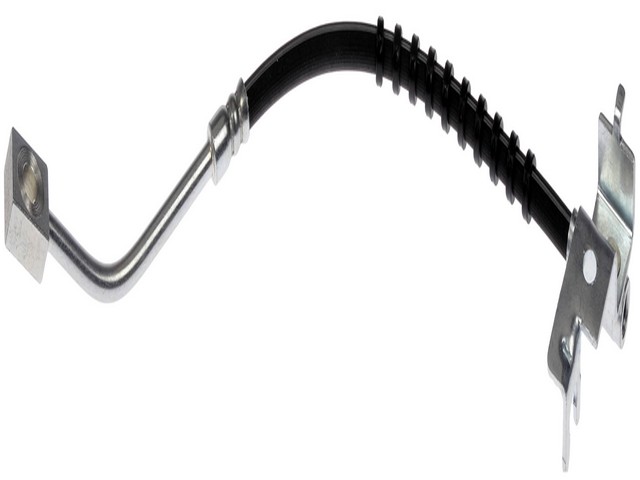
Keep brake fluid flowing from the hard lines to the caliper with this Dorman brake hydraulic hose from the First Stop line, part number H620152. It installs as a direct-fit replacement at the front left position on the 2001-2010 Chrysler PT Cruiser.
A brake hose is the flexible link that carries pressurized brake fluid to the caliper while the wheel steers and the suspension moves. Heat, road debris and age can crack or swell a hose over time, so it is often replaced as part of a complete brake repair.
- Ideal replacement: Precision-engineered to perform like the original brake hose on the vehicles it is cataloged for.
- Position-specific: Built to precise measurements for an exact fit and easy installation at its designated position.
- Quality assured: Its materials are tested to exacting government-regulated safety and durability standards.
- Durable design: Made with EPDM rubber and specially coated, corrosion-resistant fittings.
Signs a brake hose may need replacing include cracks, bulges or fluid seepage on the hose or at its fittings, and a soft or spongy brake pedal. Have the brake system diagnosed to confirm the cause, and bleed the brakes after installation as directed by the vehicle service information. For engine-specific details, see the "Vehicles it fits" section.
Interchange: 150.63062 · 150.63086 · 350-39024
15063062 · 15063086 · 35039024 · 18J4004 · 612719 · 79245 · 4860069AB · 4860069AC · 4860069AD · BH415580 · BH382313 · 2204350 · BH143020 · F143020
Product information is for general reference and may contain errors. See our Disclaimer.
This part cross-references / interchanges with the following part numbers:
18J4004, 612719, 79245, 150.63062, 150.63086, 4860069AB, 4860069AC, 4860069AD, BH415580, 350-39024, BH382313, 2204350, BH143020, F143020
Frequently Asked Questions
What does the Dorman H620152 brake hydraulic hose do?
It is the flexible hose that carries pressurized brake fluid to the brake caliper at the front left wheel. It lets the wheel steer and the suspension move.
Does this brake hose fit the 2001-2010 Chrysler PT Cruiser?
Yes. It is cataloged as the front left brake hydraulic hose for the 2001-2010 Chrysler PT Cruiser. See the "Vehicles it fits" section for engine-level details.
What is the H620152 brake hose made of?
The hose is made with EPDM rubber and has specially coated, corrosion-resistant fittings.
What are signs a brake hose may need replacing?
Cracks, bulges or leaks on the hose, seepage at the fittings, or a soft or spongy pedal may indicate a hose problem. Diagnose the brake system to confirm the cause before you replace parts.
Do I need to bleed the brakes after installing it?
Yes. Opening the hydraulic system lets air in, so bleed the brakes as the vehicle service information directs. The service information also lists the correct fasteners and whether they may be reused.