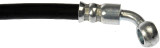
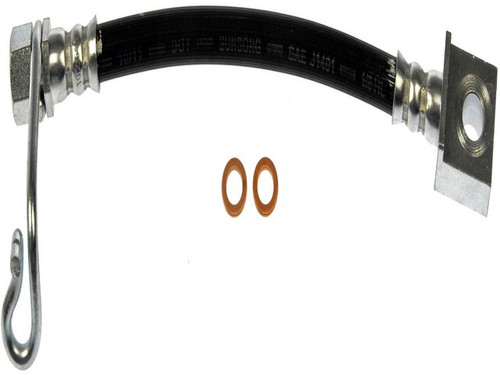
Dorman - First Stop Brake Hydraulic Hose P/N:H621203
Keep brake fluid pressure flowing to the wheel with this Dorman brake hydraulic hose from the First Stop line, part number H620186. It is a direct-fit replacement for the front left position on the 1999-2003 Jeep Grand Cherokee (see the Buyer's Guide tab for engine details) and is designed to match the fit, function and performance of the original brake hose as part of a complete brake repair.
A brake hydraulic hose is the flexible link in the brake system. It carries brake fluid pressure to the wheel's brake while letting the suspension and steering move. Over time the hose can crack, swell or seep. Signs this hose may need replacing include a soft or spongy pedal, visible cracking or bulging, fluid at the fittings, or pulling to one side under braking. Consider inspecting the matching right-side hose at the same time. Bleed the brake system after installation, and consult the vehicle service information for torque values, the correct fasteners, and whether they may be reused.
Interchange: 87-40077 · HB-87077 · 150.58012 · 350-42011
8740077 · HB87077 · 15058012 · 35042011 · 18J4010 · 612309 · 52128093 · 52128093AB · BH412650 · BH382322 · 2203277 · BH139232 · F139232
This part cross-references / interchanges with the following part numbers:
What does the Dorman H620186 brake hydraulic hose do?
It is a flexible hydraulic line that carries brake fluid pressure to the wheel's brake while allowing suspension and steering movement. It is cataloged for the front left position.
Does this brake hose fit the 1999-2003 Jeep Grand Cherokee?
Yes. It is a direct-fit replacement for the front left position on the 1999-2003 Jeep Grand Cherokee. See the Buyer's Guide tab to confirm your vehicle.
What is this brake hose made of?
The hose is made with EPDM rubber and uses specially coated, corrosion-resistant fittings.
What are signs a brake hose may need replacing?
Common signs include a soft or spongy pedal, cracked or bulging rubber, fluid seepage at the fittings, or pulling to one side when braking. Diagnose the cause before replacing parts.
Do I need to bleed the brakes after installing it?
Yes. Opening the hydraulic system lets air in, so the brakes must be bled after installation. Consult the vehicle service information for the procedure, torque values, and correct fasteners.
WARNING: These products can expose you to chemicals including lead and phthalates, which are known to the State of California to cause cancer and birth defects or other reproductive harm. For more information go to www.P65Warnings.ca.gov.