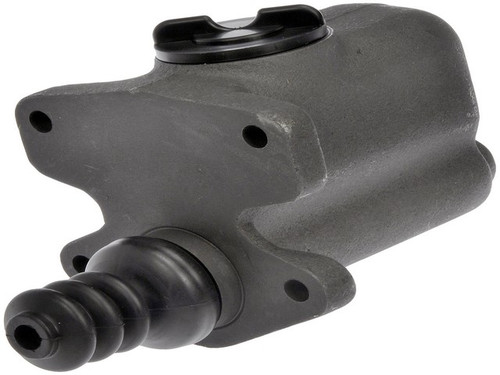
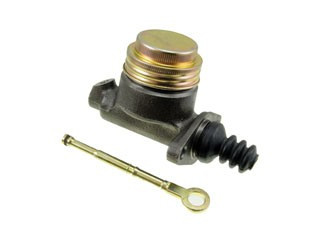
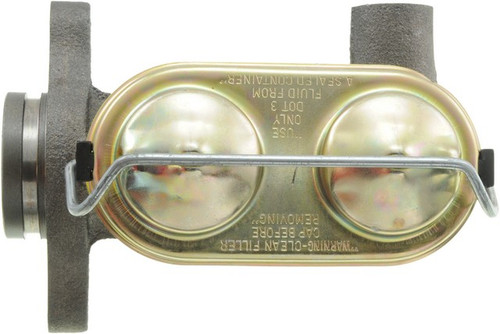
Turn pedal effort into hydraulic brake pressure with the Dorman First Stop Brake Master Cylinder, part number M18000. It is a new cast-iron unit designed to match the design, function and performance of the original master cylinder. It fits many vintage vehicles, among them the 1952-1956 Ford Sunliner, the 1960 Ford Starliner and the 1955-1960 Ford Thunderbird. See the Buyer's Guide tab for the full list.
- Precise replacement: The cylinder housing is cast iron, which matches the casting material of the original part for similar performance.
- Durable design: Every rubber component uses a high-quality EPDM compound that resists glycol-based brake fluid.
- 100% new: It is made entirely from new materials for quality and safety.
- Strict specifications: It is built to meet rigorous SAE International standards.
Specifications: The bore diameter is 1 in. The unit has one outlet with a 1/2-20 rearward outlet size, and the reservoir is included. Mounting hardware and a sensor are not included. Country of origin: Taiwan.
Signs that a master cylinder may need replacing include a soft or sinking brake pedal, brake fluid leaking around the master cylinder, or a reservoir that keeps losing fluid. Diagnose the cause before replacing any parts. If the original master cylinder is at fault, M18000 replaces it.
Interchange: 83-34078 · 100-2149 · M-81078 · 13-57583 · 10-23222 · 10-57583 · 130.61078 · 355-54057
8334078 · 1002149 · M81078 · 1357583 · 1023222 · 1057583 · 13061078 · 35554057 · M900030 · M900042 · 3200299 · MC500770 · B5A2140A · B5A2140B · B7A2140A · 5461240 · 5461270 · 5463112 · MC18000 · MC23222 · F18000
This part cross-references / interchanges with the following part numbers:
83-34078, M900030, M900042, 100-2149, M-81078, 13-57583, 10-23222, 10-57583, 130.61078, 3200299, MC500770, 355-54057, B5A2140A, B5A2140B, B7A2140A, 5461240, 5461270, 5463112, MC18000, MC23222, F18000