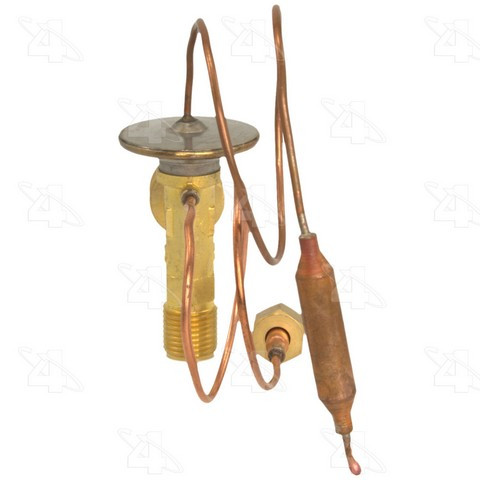
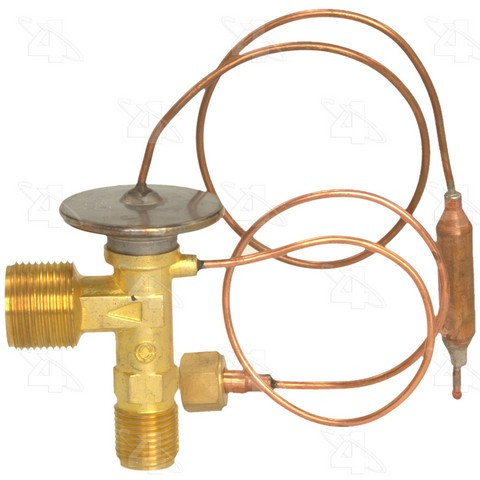
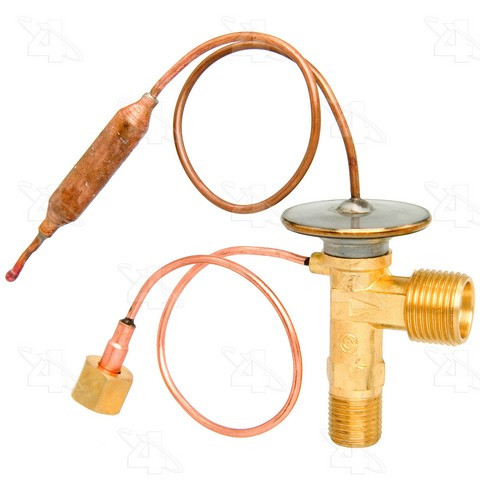
Four Seasons 39000 A/C expansion valve for the 1994-2002 Honda Accord and other vehicles meters refrigerant into the evaporator to cool the cabin. Its calibration is aimed at cabin comfort for both driver and passengers.
- Externally equalized TXV for R134A systems
- Brass/copper design, double soldered for integrity
- O-rings, gaskets and seals included for each application
- Super heat of 4.5
Quick facts
- Part: Four Seasons 39000 A/C expansion valve
- Fits: 1994-2002 Honda Accord and other vehicles
- Material: Brass/copper design, double soldered
- Condition: New
Weak cooling or vents that blow warmer than they should can be signs of a failing expansion valve. These signs alone do not prove the valve is at fault, since a low refrigerant charge can produce them too.
Fits
Besides the Accord, the 1997-2001 Honda CR-V and the 1994-2000 Honda Civic are among the cars it suits. It is engineered to meet or exceed O.E. fit, form and function requirements. Driving a different car? Look for it in the "Vehicles it fits" section.
Specifications
Fit and size
- Quantity per vehicle: 1
- Refrigerant type: R134A
- Super heat: 4.5
Build and materials
- Type: TXV, externally equalized
- Material: Brass/copper design, double soldered
- Condition: New
- Country of origin: China
In the box
One expansion valve with O-rings, gaskets and seals; each vehicle takes one. Mounting hardware is not included, so plan on new fasteners.
Product information is for general reference and may contain errors. See our Disclaimer.
Frequently Asked Questions
Is this the right expansion valve for a 1994-2002 Honda Accord?
Yes. Four Seasons 39000 fits the 1994-2002 Honda Accord. If your car is a different one, look for it in the "Vehicles it fits" section.
Is this the right Honda Civic ac expansion valve for the 1994-2000 model years?
Yes. Four Seasons 39000 fits the 1994-2000 Honda Civic, and the car takes one valve.
What does this Four Seasons expansion valve come with?
One expansion valve with O-rings, gaskets and seals for the application. Mounting hardware is not included.
What refrigerant does the 39000 expansion valve work with?
It is made for R134A systems. It is an externally equalized TXV with a super heat of 4.5.
What are signs of a failing 39000 A/C expansion valve?
Weak cooling or vents that blow warmer than normal can be signs. Testing needs the engine running and gauges on the A/C system, so a shop can do it.