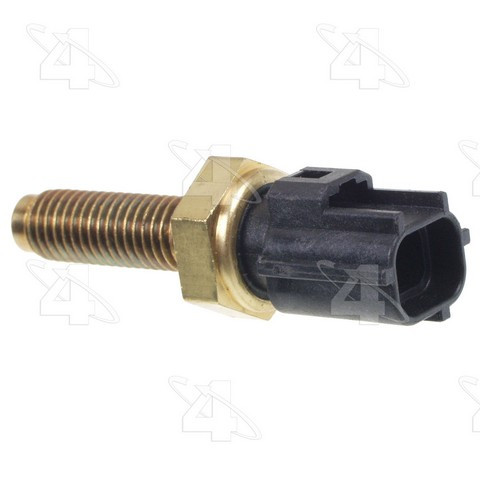
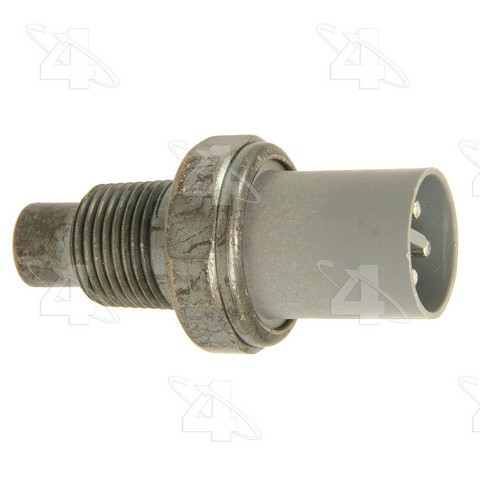
Replace a failing coolant temperature sensor with the Four Seasons switch 36425, an engine coolant temperature sensor switch designed to sense coolant temperature and pass that signal to the systems that rely on it. It fits many vehicles, among them the 1992-1994 Hyundai Elantra, 1989-1994 Hyundai Sonata and 1984-1985 Chrysler Town & Country, as a direct-fit replacement for the listed applications. It is cataloged as both a switch and an engine coolant temperature sensor.
- Brass construction: built with brass for accurate temperature sensing.
- Zinc-coated terminal: the terminal has a zinc coating to resist corrosion.
- Color coded: easy to identify at a glance.
- Sealing parts included: comes with gaskets, O-rings or seals to properly replace the product.
Four Seasons engineers and tests its products and brings more than 50 years of mobile A/C experience to its parts. If the original sensor switch is the problem, you may notice an erratic or inaccurate temperature gauge, cooling fan operation that seems off, or coolant seeping at the sensor. Other faults can cause these signs too, so diagnose the cause before replacing the part.
See the Buyer's Guide tab for engine details and the full list of vehicles.
This part cross-references / interchanges with the following part numbers:
155985, AC8129, MD069879, 207837, 36425, HS857, 11136402, 11136425, 907837, 19189487, 88999626, 301700, 1712590, 22021310, 3922021300, 3922021310, 3922021320, 3922021330, 6816, 212857, 49341, 211857, CT0111, SU306