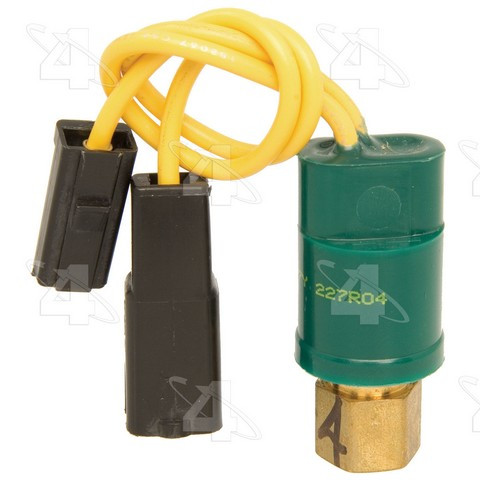
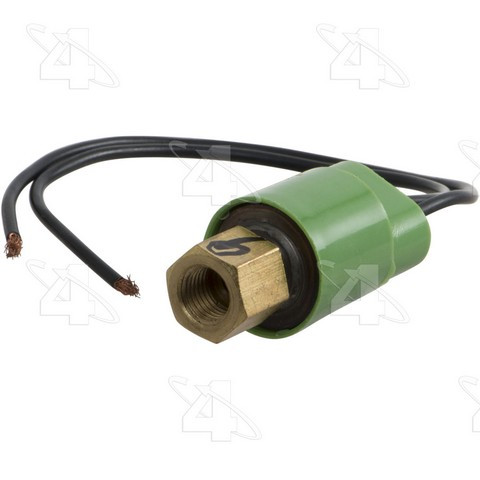
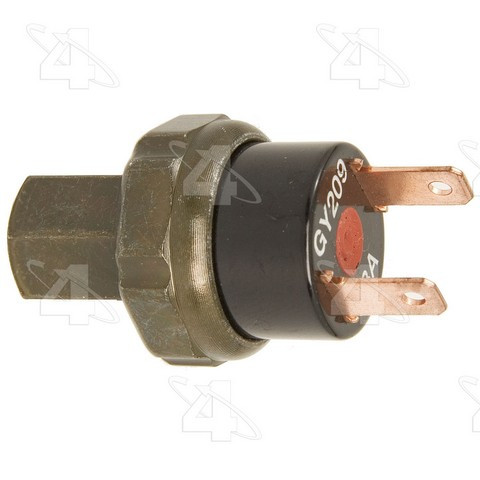
Help protect your A/C compressor with the Four Seasons switch 35838, a system mounted low cut-out pressure switch that monitors refrigerant pressure and opens the compressor circuit when that pressure drops too low. It fits many vehicles, among them the 2013-2014 Peterbilt 220, 2008-2014 Peterbilt 210 and 2008-2014 Peterbilt 320, as a direct-fit replacement for the listed applications.
- Corrosion protection: The switch is zinc coated to resist corrosion.
- Vehicle specific: Four Seasons builds it for vehicle-specific applications.
- Sealing parts included: It contains the gaskets, O-rings or seals needed to properly replace the switch.
- Easy identification: The switch is color coded so it is easy to identify.
Four Seasons engineers and tests its products, and backs them with more than 50 years of mobile A/C experience.
Some signs that a low cut-out pressure switch may need replacing are a compressor that will not engage, a compressor that cycles on and off rapidly, or an A/C system that blows warm air. A low refrigerant charge or another system fault can cause the same symptoms, so diagnose the cause before you replace the switch.
See the Buyer's Guide tab for the full list of applications and engine details.