
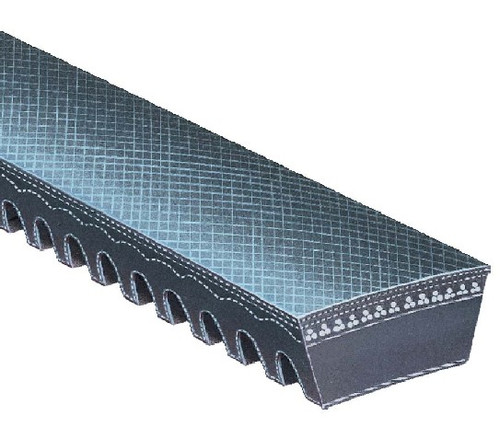


Part number:
9400
UPC:
072053312058
Condition:
New
Weight:
0.28 LBS
Item Package Quantity:
1

Gates Accessory Drive Belt P/N:9400
$14.99
Keep every belt-driven engine accessory turning smoothly with the Gates Automotive XL High Capacity V-Belt (9400), a durable replacement V-belt built for demanding engine drives. It fits a wide range of classic and heavy-duty applications, including the 1967 Chevrolet Impala 6.5L / 7.0L, the 1966-1967 Dodge Charger 5.2L, and the 1975-1977 Ford F-500 5.4L / 5.9L / 6.4L (see the "Vehicles it fits" section for the full list).
- Variable notched design: as engine heat builds, the belt tightens on the drive to help prevent slippage, improve belt performance, and reduce noise.
- Fiber-loaded rubber stock: adds flexibility along the length of the belt and provides greater lateral stability in the pulley.
- Form-ground: precise top-width and sidewall dimensional control for a proper fit to the pulley.
- Thermally-active tensile cords: deliver maintenance-free performance when properly installed and tensioned.
- Resistance: the belt resists oil, heat, ozone, weather, and aging for improved belt life.
This HC50 V-belt has a .47 in (12 mm) top width, a 40 in (1016 mm) effective length, and a 40.62 in (1031 mm) outside circumference, with an EPDM belt body and polyester cords. It meets or exceeds SAE J636C standards. Country of origin: United States.
Frequently Asked Questions
What is the Gates 9400 V-belt?
It is a Gates Automotive XL High Capacity V-belt (HC50) with a .47 in (12 mm) top width, 40 in (1016 mm) effective length, and 40.62 in (1031 mm) outside circumference, built for demanding engine drives.
What vehicles does the 9400 belt fit?
It fits many vehicles, including the 1967 Chevrolet Impala 6.5L / 7.0L, 1966-1967 Dodge Charger 5.2L, and 1975-1977 Ford F-500 5.4L / 5.9L / 6.4L — see the "Vehicles it fits" section for the full list.
How many belts do I need?
This listing is for one belt. The quantity varies by application — some engines use two — so check the "Vehicles it fits" section for the exact quantity your vehicle requires.
What does the notched construction do?
The variable notched design responds to thermal forces in the engine: as it heats up, the belt tightens on the drive to help prevent slippage, improve belt performance, and reduce noise.
What is the 9400 belt made of?
It uses an EPDM belt body with polyester tensile cords, fiber-loaded rubber stock for flexibility and lateral stability, and it resists oil, heat, ozone, weather, and aging. Country of origin: United States.
Reviews
No reviews yet — be the first to review this product.
Write a ReviewWrite a Review
Gates
Gates Accessory Drive Belt P/N:9400
Related Products

Gates Accessory Drive Belt P/N:9465HD
FleetRunner Heavy-Duty V-BeltGates FleetRunner Heavy-Duty V-belts are designed for heavy-duty applications. Patented EPDM construction with distinct green overcord is built specifically for more...
$35.99


Gates Accessory Drive Belt P/N:7447M
Automotive XL High Capacity V-BeltGates Automotive XL V-Belt is a durable, long-lasting replacement V-belt designed for the most demanding engine drives. Due to thermal forces in the vehicle engine,...
$55.99
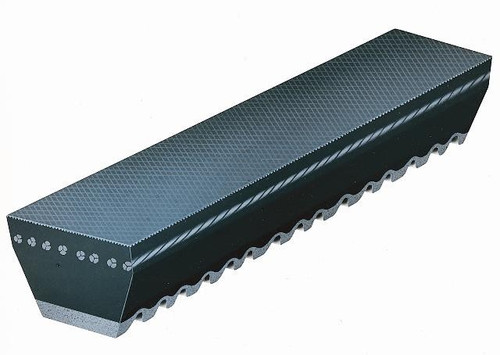
Gates Accessory Drive Belt P/N:9453M
Automotive XL High Capacity V-BeltGates Automotive XL V-Belt is a durable, long-lasting replacement V-belt designed for the most demanding engine drives. Due to thermal forces in the vehicle engine,...
$29.99

Gates Accessory Drive Belt P/N:9362M
Gates Accessory Drive Belt P/N:9362M. Fits: Nissan Pickup.
$18.99