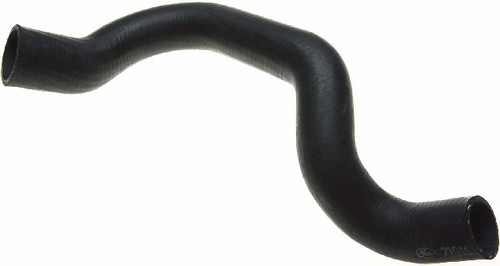
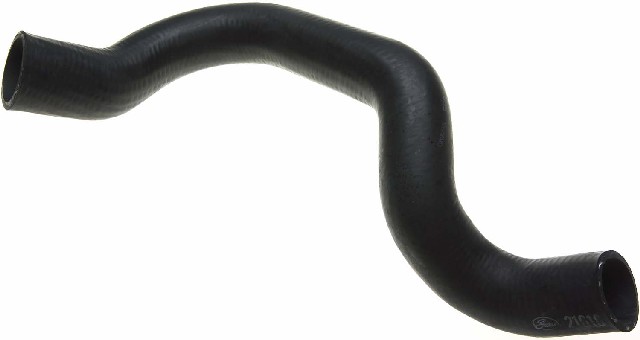
Gates 21618 lower radiator coolant hose for the 1985 Chevrolet G30 V8 5.0L, the 1985-1996 G30 V8 5.7L and other vehicles carries coolant between the engine and the radiator.
- Specifically engineered materials resist collapse under vacuum
- Engineered to resist electrochemical degradation, the leading cause of hose failure
- Pre-shaped molded hose designed for a sealed fit
- EPDM tube with synthetic fiber knit reinforcement and a heat-, ozone- and coolant-resistant EPDM cover
- Meets SAE 20R4 class D2 and DIN 73411 class A, except for tolerances
- Temperature range of -40 °F to +257 °F (-40 °C to +125 °C)
Quick facts
- Part: Gates 21618 radiator coolant hose
- Fits: the 1985 Chevrolet G30 V8 5.0L, the 1985-1996 G30 V8 5.7L and other vehicles
- Position: Lower
- Material: EPDM
- Condition: New
Coolant seepage, a bulging or collapsed hose, or cracks in the cover can mean a hose is worn, so look it over when the engine is cool. Overheating alone doesn't prove the hose is at fault, since a stuck thermostat can cause it too.
Fits
The vehicles it fits include the 1993-1996 Chevrolet GP3500 V8 5.7L and the 1985-1996 GMC G3500 V8 5.7L, and each takes one. If your vehicle isn't named here, open the "Vehicles it fits" section to check your exact model and engine.
Specifications
Fit and size
- Position: Lower
- Quantity per vehicle: 1
- End 1 inside diameter: 38 mm (1.5 in)
- End 2 inside diameter: 44 mm (1.75 in)
- Centerline length: 589 mm (23.2 in)
Build and materials
- Construction: molded, no internal spring
- Material: EPDM
- Condition: New
- Country of origin: United States
Installation notes
- Replace the hose clamps each time a new coolant hose is installed.
- Not for fuel or oil transfer applications.
Interchange: MH-4618 · 14-1820-0 · KM-2234
24203L · MC145 · C1618 · 61667 · 71244 · D71244 · 51313895 · 15598395 · 476 · 8336 · 2118
Product information is for general reference and may contain errors. See our Disclaimer.
This part cross-references / interchanges with the following part numbers:
24203L, MC145, MH-4618, C1618, 14-1820-0, 21618, 61667, 71244, D71244, 51313895, 15598395, 476, KM-2234, 8336, 2118
Frequently Asked Questions
Is this Gates lower radiator hose right for the 1985-1996 GMC G3500 V8 5.7L?
Yes. Gates 21618 is a lower hose listed for the 1985-1996 GMC G3500 V8 5.7L, and that vehicle takes one.
What are the end sizes on this Gates molded coolant hose?
Gates 21618 has one end with a 38 mm (1.5 in) inside diameter and the other with 44 mm (1.75 in). The centerline length is 589 mm (23.2 in).
What is this Gates coolant hose made of?
The tube and the cover are EPDM, with a synthetic fiber knit reinforcement. The temperature range is -40 °F to +257 °F (-40 °C to +125 °C).
Do I need new clamps with a Gates radiator coolant hose?
Yes. Replace the hose clamps each time a new coolant hose is installed. This hose is not for fuel or oil transfer.
Does this lower hose have an internal spring?
No. This hose is molded and pre-shaped without a spring, and its materials resist collapse under vacuum.