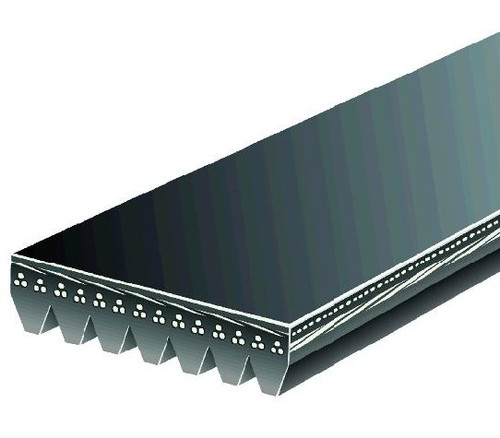
Gates 6PK1190 serpentine belt for the 1999-2001 Honda Odyssey V6 3.5L is among Gates ribbed belts and drives the alternator and air conditioning. It is a Micro-V serpentine drive belt that passes engine power through its ribs to the accessory pulleys.
- Gates Micro-V construction with 6 ribs and a K cross section
- EPDM rubber construction resists cracking on the rib surface
- Special belt construction eliminates belt noise and reduces tension loss
- Polyester cord material
- Effective length of 1190 mm (46.85 in) and top width of 21 mm
Quick facts
- Part: Gates 6PK1190 serpentine belt
- Fits: 1999-2001 Honda Odyssey V6 3.5L
- Position: Alternator and air conditioning
- Material: EPDM
- Condition: New
A worn belt can show cracks across the ribs, squeal at start-up or leave charging and A/C weak. A tensioner, a pulley, the alternator or the A/C compressor can be behind these signs too, so find the cause before buying a belt.
Fits
This is a direct-fit belt for the 1999-2001 Honda Odyssey V6 3.5L. Its size, construction and materials match the original equipment, and it meets or exceeds the original equipment manufacturer's specifications.
Specifications
Fit and size
- Position: Alternator and air conditioning
- Quantity per vehicle: 1
- Effective length and outside circumference: 1190 mm (46.85 in)
- Top width: 21 mm (13/16 in)
- Rib count: 6
- Cross section designation: K
Build and materials
- Type: Automotive V-ribbed belt (standard)
- Material: EPDM
- Cord material: Polyester
- Grade type: OE Performance
- Condition: New
- Country of origin: United States
In the box
One serpentine belt. This listing holds one belt, and the 1999-2001 Honda Odyssey V6 3.5L takes one.
Installation notes
- Replacing the tensioner is recommended if the vehicle is equipped with one.
Product information is for general reference and may contain errors. See our Disclaimer.
Frequently Asked Questions
Will the Gates 6PK1190 work as a 1999-2001 Honda Odyssey V6 3.5L serpentine belt?
Yes. The Gates 6PK1190 is made for the 1999-2001 Honda Odyssey V6 3.5L, which takes one belt.
Is the Gates 6PK1190 one of the Gates drive belts made of EPDM?
Yes. The Gates 6PK1190 is made of EPDM rubber with a polyester cord, and the EPDM construction resists cracking on the rib surface.
What size is the Gates Micro-V serpentine belt 6PK1190?
This belt has 6 ribs, a K cross section, a 21 mm top width and an effective length of 1190 mm (46.85 in).
Should I replace the tensioner when fitting Gates serpentine belts?
Tensioner replacement is recommended if the vehicle has one. This applies to the Gates 6PK1190 as well.
What does a worn serpentine belt look like before it fails?
Cracks on the rib surface, noise at start-up or weak charging and A/C can mean the belt is worn. Look at it by eye with the engine off and cool; a shop can check the rest.