

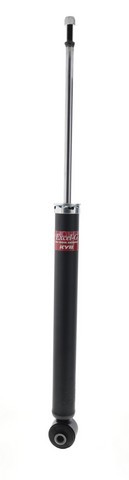

Settle body movement and keep your tires planted with the KYB Excel-G Shock Absorber 3430072, a nitrogen gas-charged, twin-tube rear shock that drops in as a direct-fit replacement for the 2018-2023 Hyundai Kona (see the Buyer's Guide tab for engine-level details). Excel-G is built on the same KYB OE assembly lines and calibrated to restore your Kona's original, designed control and handling rather than change it — the classification KYB calls OEA (Original Equipment for the Aftermarket).
- Nitrogen gas-charged twin-tube design: includes every quality component found in KYB's global OEM products, the preferred choice of professional technicians.
- Triple lip fluid seal: reduces the chance of oil and gas leaking out.
- Vehicle-specific damping valves: hand assembled in-house to help manage tire contact, steering response and body movement.
- Strong, thick strut bodies and brackets: minimize flex to help maintain correct alignment in all conditions.
Because electronic safety systems depend on the suspension, brakes and tires working as the manufacturer intended, the Excel-G helps keep those systems performing as designed. Worn shocks often show up as excess bounce, nose dive, poor body control or fluid leakage.
Interchange: 55307J9100
This part cross-references / interchanges with the following part numbers:
Frequently Asked Questions
What vehicle does this KYB 3430072 shock fit?
It is a direct-fit replacement for the 2018-2023 Hyundai Kona. Check the Buyer's Guide tab to confirm the exact application for your vehicle.
Is this a front or rear shock?
This KYB Excel-G 3430072 is cataloged as a rear-position shock absorber for the listed Hyundai Kona applications.
What type of shock is the Excel-G?
It is a nitrogen gas-charged, twin-tube shock built on KYB's OE assembly lines and calibrated to restore the vehicle's original designed performance.
What does the triple lip fluid seal do?
The triple lip fluid seal is designed to reduce the chance of oil and gas leaking out of the shock, helping maintain consistent damping.
How do I know if my shocks need replacing?
Signs may include excess bouncing, nose dive when braking, poor body control, or visible fluid leakage. Diagnose the cause before replacing, and replace shocks as an axle pair for balanced control.
Write a Review