Sold out



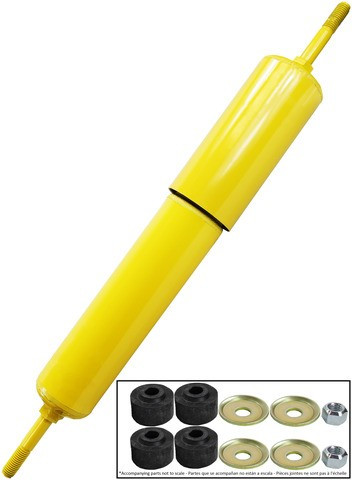
Help bring back a composed, controlled ride with this Monroe shock absorber from the Restore line, part number 210114, a front unit designed to deliver consistent performance. It is a direct-fit replacement for many vehicles, including the 1970-1981 Chevrolet Camaro and 1955-1957 Chevrolet Bel Air. See the Buyer's Guide tab for the full list of applications and engine details.
Monroe Restore shock absorbers are built to provide a high level of handling and control while filtering out noise, vibration and harshness. The line covers domestic and import passenger cars, light trucks and SUVs.
As a front suspension shock absorber, it dampens spring movement at the wheel to help keep the tire in contact with the road and the body under control. Signs a shock may need replacing include excessive bouncing after bumps, nose dive under braking, fluid leaking from the shock body, and cupped or uneven tire wear. Replacing the front shocks as a pair is recommended for balanced handling.
This part cross-references / interchanges with the following part numbers:
Which vehicles does the Monroe 210114 fit?
It fits many vehicles, including the 1970-1981 Chevrolet Camaro and 1955-1957 Chevrolet Bel Air. See the Buyer's Guide tab for the full list.
Is the Monroe 210114 a front or rear shock?
The catalog lists Monroe 210114 as a front shock absorber for the listed applications.
What does the nitrogen gas charge do?
The nitrogen gas charge helps maintain tire-to-road contact by reducing aeration and shock fade. Monroe states that this improves ride and handling.
What are signs my shock absorbers need replacing?
Common signs include excessive bouncing after bumps, nose dive when braking, fluid leaking from the shock body, and uneven tire wear. Have the suspension inspected to confirm the cause before replacing parts.
Should I replace front shocks in pairs?
Yes. Replacing both front shocks together is recommended so damping stays even from side to side for balanced handling.



WARNING: These products can expose you to chemicals including lead and phthalates, which are known to the State of California to cause cancer and birth defects or other reproductive harm. For more information go to www.P65Warnings.ca.gov.
