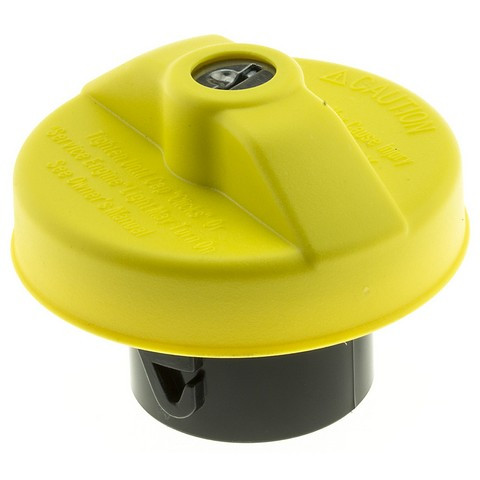
Motorad Fuel Tank Cap P/N:MGC800
Motorad MGC46 fuel tank cap for the 1966-1967 Dodge Charger 5.2L / 6.3L / 7.0L and other vehicles closes the filler opening and vents the tank through pressure and vacuum relief valves.
A fuel smell near the filler, a cracked or worn seal, or a cap that no longer tightens down can mean the cap needs replacing. A smell or warning light alone doesn't prove the cap is at fault, though; a leaking evaporative hose is another common source.
The 1966-1967 Dodge Charger 5.2L / 6.3L / 7.0L takes one cap. This cap is listed for a wide range of Chevrolet, Dodge, Buick and Chrysler models, including the 1964 Chevrolet Impala 3.8L / 4.6L / 5.3L / 5.4L / 6.7L and the 1969-1970 Chevrolet Camaro 4.1L / 5.0L / 5.7L. If your car isn't named here, look up its year and engine under the "Vehicles it fits" section.
Fit and size
Build and materials
Interchange: 703-1034
12F15 · 6046 · 10646 · C20Z9030B · 40046 · P6046 · 9MGC46
Product information is for general reference and may contain errors. See our Disclaimer.
This part cross-references / interchanges with the following part numbers:
Does the Motorad MGC46 fuel tank cap fit a 1966-1967 Dodge Charger?
Yes. The Motorad MGC46 is listed for the 1966-1967 Dodge Charger 5.2L / 6.3L / 7.0L, and the car takes one cap.
Is the Motorad MGC46 a locking fuel cap?
No. The Motorad MGC46 is a non-locking cap with a twist-lock closure and a round shape.
What is this fuel tank cap made of?
This cap is steel. It is round, vented and closes with a twist-lock.
Does this fuel tank cap have pressure and vacuum relief valves?
Yes. The cap is vented, and its pressure and vacuum relief valves are designed to prevent fuel from evaporating.
Will a Motorad MGC46 cap meet emissions requirements?
Yes. The Motorad MGC46 is manufactured to pass all state and federal emissions requirements and is independently tested for emission control.
No reviews yet — be the first to review this product.
Write a Review
WARNING: These products can expose you to chemicals including lead and phthalates, which are known to the State of California to cause cancer and birth defects or other reproductive harm. For more information go to www.P65Warnings.ca.gov.