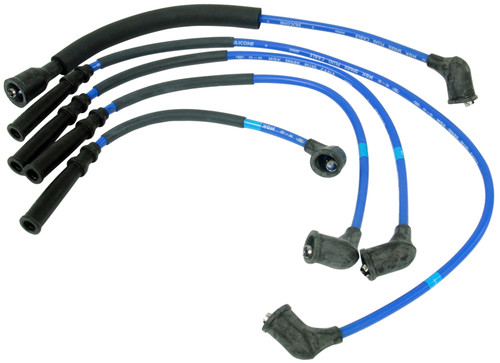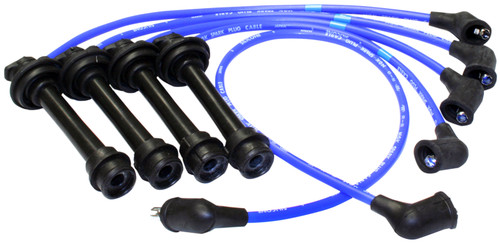
NGK Spark Plug Wire Set P/N:9429
NGK 9629 spark plug wire set for the 1986-1992 Toyota Supra 6-cylinder 3.0L carries high voltage to the plugs through each NGK wire. It comes as 6 wires with a coil lead, and the 6-cylinder engine takes one set, one wire per cylinder.
Cracked or burnt jackets and boots, a misfire or rough running can mean the wires are wearing out. A misfire alone does not prove the wires are at fault; a worn spark plug is another common cause.
This NGK wire set is a direct-fit replacement for the 1986-1992 Toyota Supra 6-cylinder 3.0L (L6-3.0L), built to OEM tolerances.
Fit and size
Build and materials
Interchange: 175-5855 · 35-6037 · 671-6169 · RC-TX07
86469 · CH7629 · 700465 · 09216 · 9216 · 127629 · 156002 · 55930 · 7637
Product information is for general reference and may contain errors. See our Disclaimer.
This part cross-references / interchanges with the following part numbers:
Is NGK 9629 the right spark plug wire for the 1986-1992 Toyota Supra 6-cylinder 3.0L?
Yes. NGK 9629 is listed for the 1986-1992 Toyota Supra 6-cylinder 3.0L (L6-3.0L), and the set has 6 wires with a coil lead.
Are these NGK plug wires resistor type?
Yes. NGK 9629 uses variable pitch resistor cables with a magnetic core that suppresses EMI/RFI noise across the frequency spectrum.
What temperature are these NGK blue spark plug wires built to withstand?
The outer jacket is built to withstand temperatures greater than 250 degrees C. The inner insulation is EPDM or silicone for dielectric strength.
What are the terminals on this wire set made of?
The terminals on this wire set are stainless steel, with up to 3 serrated crimps where possible. The spark plug end uses a locking C-shaped spring clip with corrosion-resistant plating.
Is RC-TX07 the same as NGK 9629?
Yes. RC-TX07 is NGK's other number for this set, alongside 9629, so either number finds the same wire set.
Published by the manufacturer of this part. Links open in a new tab.
No reviews yet — be the first to review this product.
Write a Review
WARNING: These products can expose you to chemicals including lead and phthalates, which are known to the State of California to cause cancer and birth defects or other reproductive harm. For more information go to www.P65Warnings.ca.gov.