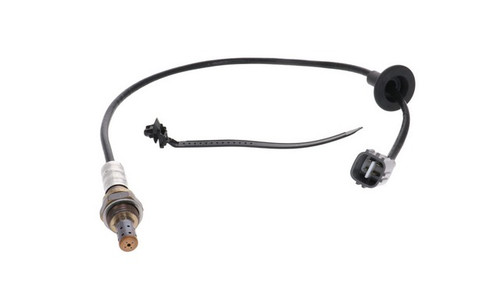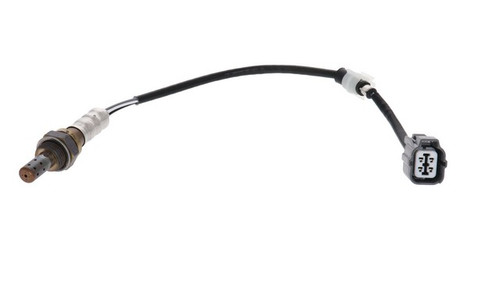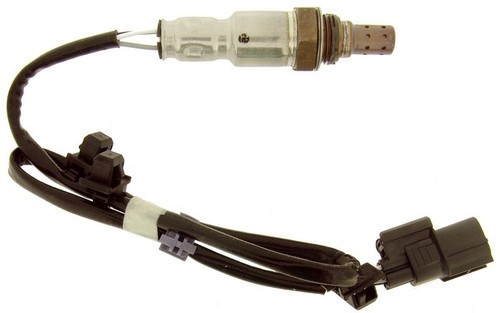
NTK Oxygen Sensor P/N:24114
Keep your catalytic-converter monitoring accurate with the NTK Oxygen Sensor 25202, a specific-fit downstream (post-catalytic-converter) O2 sensor for the 2010-2013 Hyundai Tucson (L4-2.4L), 2011-2013 Hyundai Tucson (L4-2.0L), 2011-2016 Kia Sportage (L4-2.0L), and 2011-2013 Kia Sportage (L4-2.4L). Mounted after the catalytic converter, it reads exhaust oxygen and reports to the OBDII system to help gauge converter efficiency.
This is a heated, narrow-band switching zirconia-type sensor. It threads in with an M18 x 1.5 metric thread and a 7/8 in (22mm) wrench size, uses a 4-wire, pin-type connection with a male rectangular connector, and includes a 17.25-inch wiring harness. Country of origin: Japan. If a failed downstream oxygen sensor is the cause of a catalyst-efficiency trouble code, this replaces it.
Interchange: 18055 · 234-4444 · 2344444 · 392102G650. Manufacturer part number 25202.
This part cross-references / interchanges with the following part numbers:
Is this an upstream or downstream oxygen sensor?
It's a downstream (post-catalytic-converter) oxygen sensor, positioned after the catalytic converter to read exhaust oxygen and report converter efficiency to the OBDII system.
Which vehicles does the NTK 25202 fit?
It's a specific-fit for the 2010-2013 Hyundai Tucson (L4-2.4L), 2011-2013 Hyundai Tucson (L4-2.0L), 2011-2016 Kia Sportage (L4-2.0L), and 2011-2013 Kia Sportage (L4-2.4L). See the Buyer's Guide tab.
Is it a heated sensor?
Yes. It's a heated, narrow-band switching zirconia-type oxygen sensor.
What are the installation specs?
It uses an M18 x 1.5 metric thread with a 7/8 in (22mm) wrench size, a 4-wire pin-type connection with a male rectangular connector, and a 17.25-inch wiring harness.
How do I know if I need to replace it?
Signs a downstream O2 sensor may need replacing include a check engine light with catalyst-efficiency or oxygen-sensor codes. Diagnose the cause first, since other parts can trigger these codes.
WARNING: These products can expose you to chemicals including lead and phthalates, which are known to the State of California to cause cancer and birth defects or other reproductive harm. For more information go to www.P65Warnings.ca.gov.