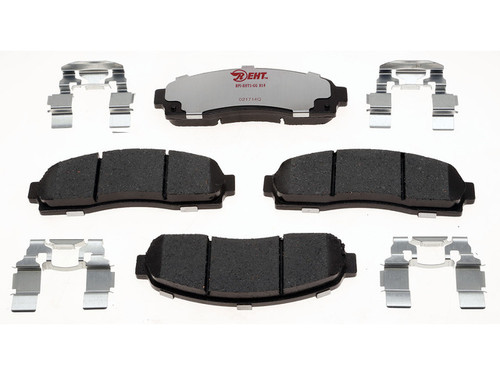
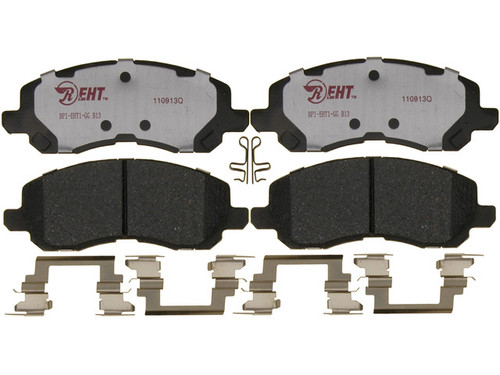
Raybestos Brakes Disc Brake Pad Set P/N:EHT866H
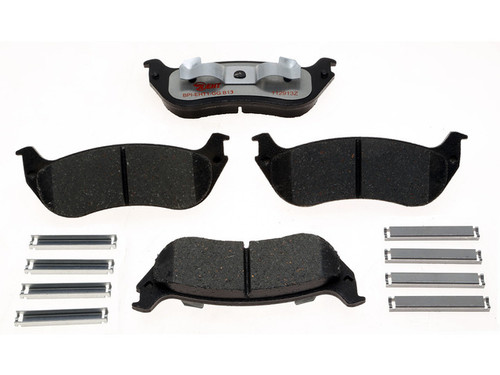
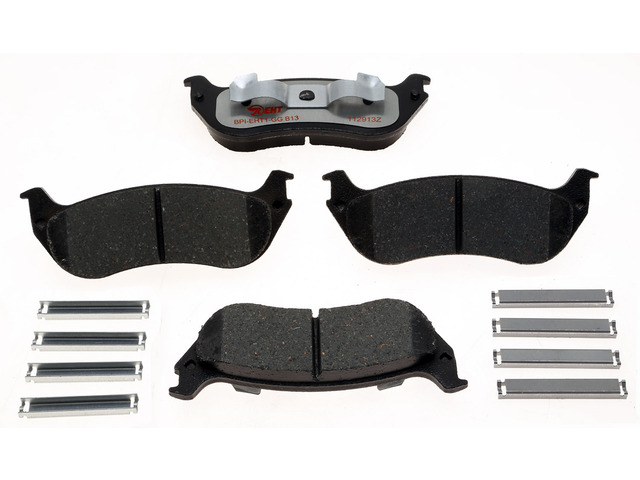
Raybestos EHT881H rear brake pad for the 2002-2005 Ford Explorer and other vehicles presses against the rotor to slow the vehicle. These Raybestos pads from the Element3 Hybrid line combine ceramic and semi-metallic formulations in one pad.
Squealing, grinding or a longer stopping distance can mean worn pads. A sticking caliper or a worn rotor can be behind those signs too, so track down the cause before you buy pads.
This is a brake pad for the 2002-2005 Ford Explorer and the 2002-2005 Mercury Mountaineer. The 2002-2005 Ford Explorer takes one set for the rear axle.
Fit and size
Build and materials
One rear brake pad set with mounting hardware.
Product information is for general reference and may contain errors. See our Disclaimer.
Are these the rear brake pads for the 2002-2005 Ford Explorer?
Yes. Raybestos EHT881H is a rear brake pad set for the 2002-2005 Ford Explorer and the 2002-2005 Mercury Mountaineer.
Does the Raybestos EHT881H pad set come with mounting hardware?
Yes, mounting hardware is included with this rear brake pad set. Stainless steel hardware and electronic wear sensors come with it where applicable.
What friction material do Raybestos brake pads like the EHT881H use?
The EHT881H uses a hybrid friction material. Element3 pads combine ceramic and semi-metallic formulations in one pad.
What can worn Raybestos EHT881H rear pads sound or feel like?
Squealing, grinding or a longer stopping distance can point to worn pads. Have the brakes inspected or serviced promptly rather than driving on worn pads.
Do the Raybestos EHT881H disc brake pads have noise dampening shims?
Yes. The Element3 EHT formulations use multi-layer noise dampening shims that promote quiet stopping across a range of temperatures.
No reviews yet — be the first to review this product.
Write a Review
WARNING: These products can expose you to chemicals including lead and phthalates, which are known to the State of California to cause cancer and birth defects or other reproductive harm. For more information go to www.P65Warnings.ca.gov.