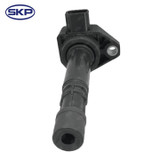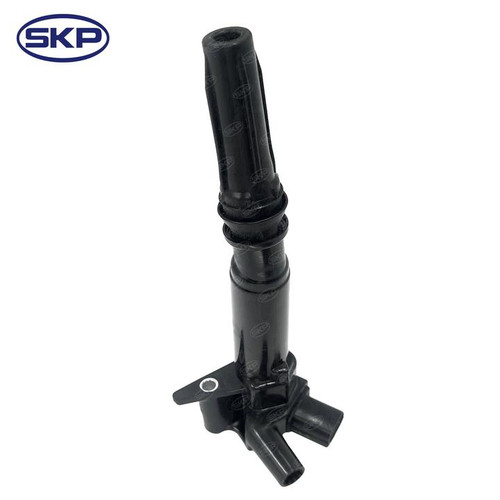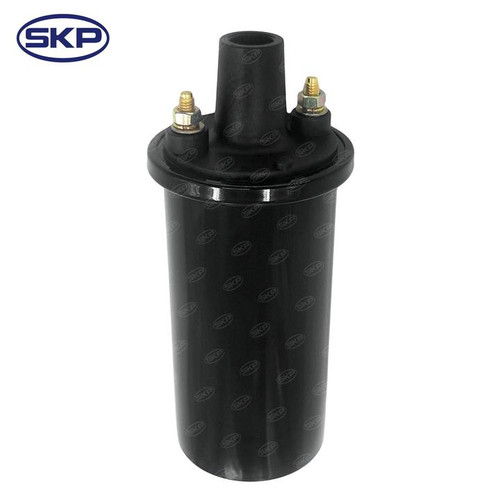
SKP Ignition Coil P/N:SKIC152
Generate the high voltage your ignition system needs for a strong, consistent spark with the SKP ignition coil, part number SKUC15T. It fits many vehicles, among them the 1968-1970 Toyota Corolla (L4-1.1L and L4-1.2L), the 1957 Dodge Truck (L6-3.8L, L6-4.1L, L6-4.3L, V8-5.0L, V8-5.1L and V8-5.8L) and the 1968-1970 Jeep CJ5 (L4-2.2L). See the Buyer's Guide tab for the full list of direct-fit applications.
SKP builds its ignition coils with performance and durability in mind. This coil is engineered to meet or surpass OE specifications for a proper fit and easy installation on the listed applications.
If a worn or failed coil is behind misfires, hard starting or rough running, the SKUC15T replaces it. If you need an ignition coil replacement for the 1968-1970 Toyota Corolla with the L4-1.1L or L4-1.2L engine, it is among the listed applications. The listed applications use one coil. Country of origin: China.
Is the SKUC15T the right engine coil for a 1968-1970 Toyota Corolla with the L4-1.1L or L4-1.2L?
Yes. It is listed as a direct-fit coil for the 1968-1970 Toyota Corolla with the L4-1.1L or L4-1.2L engine. Check the Buyer's Guide tab to confirm your exact year and engine.
What other vehicles does this coil fit?
It fits many vehicles, including the 1957 Dodge Truck (L6-3.8L, L6-4.1L, L6-4.3L, V8-5.0L, V8-5.1L, V8-5.8L) and the 1968-1970 Jeep CJ5 (L4-2.2L). The Buyer's Guide tab shows the full list.
What does an ignition coil do?
It steps the battery's low voltage up to the high voltage needed to fire the spark plugs, which ignite the air-fuel mixture in each cylinder.
What are signs an ignition coil may need replacing?
Misfires, hard starting, rough running, stalling or a loss of power can come from a failing coil. Other ignition or fuel problems cause these too, so diagnose the cause before replacing it.
How many coils do I need, and where is this one made?
The listed applications use one coil, so one SKUC15T is needed per vehicle. Its country of origin is China.
WARNING: These products can expose you to chemicals including lead and phthalates, which are known to the State of California to cause cancer and birth defects or other reproductive harm. For more information go to www.P65Warnings.ca.gov.