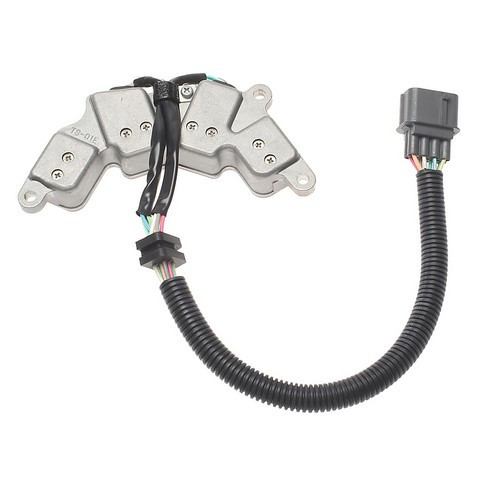
Standard Ignition PC158 crankshaft position sensor for the 1991-2005 Acura NSX V6 3.0L and the 1997-2005 NSX V6 3.2L reports crankshaft position to the engine computer.
- Custom magnetic circuit programming and performance testing for precise calibration between the target wheel and sensor output
- End-of-line testing for timing, pulse width and signal amplitude, plus in-lab vibration and extreme temperature testing
- Built for accuracy, speed and durability to support fuel economy, emissions and performance
- Analog-to-digital converter with adaptive switch points for quick processing to adjust fuel and timing
Quick facts
- Part: Standard Ignition PC158 crankshaft position sensor
- Also called: crank sensor
- Fits: 1991-2005 Acura NSX V6 3.0L and the 1997-2005 NSX V6 3.2L
- Condition: New
A failing crankshaft position sensor, also known as the crank sensor, can show up as hard starting, stalling or a check engine light, though those signs can have other causes. Before replacing it, look over the connector and wiring with the engine off for damage, corrosion or a loose plug.
Fits
Engineered specifically for Acura, this sensor fits the 1991-2005 Acura NSX V6 3.0L and the 1997-2005 NSX V6 3.2L, and either engine takes one sensor.
Specifications
Fit and size
- Quantity per vehicle: 1
- Connector shape: Rectangular
- Terminal quantity: 8
Build and materials
- Connector type: Plug in, female
- Terminals: Blade, male
- Condition: New
- Country of origin: Japan
Interchange: 37840PR7A02 · 37840PR7A03 · CSS518 · SU4250 · CSS918
Product information is for general reference and may contain errors. See our Disclaimer.
This part cross-references / interchanges with the following part numbers:
37840PR7A02, 37840PR7A03, CSS518, SU4250, CSS918, PC158
Frequently Asked Questions
Does the Standard Ignition PC158 crankshaft position sensor fit the 1997-2005 Acura NSX V6 3.2L?
Yes. The Standard Ignition PC158 fits the 1997-2005 Acura NSX V6 3.2L and the 1991-2005 NSX V6 3.0L, and the car takes one sensor.
What kind of connector does the PC158 sensor have?
The Standard Ignition PC158 has a rectangular, plug-in female connector with 8 male blade terminals.
What testing does this crankshaft position sensor go through?
It gets end-of-line testing for timing, pulse width and signal amplitude, plus in-lab vibration and extreme temperature testing.
Can I keep driving with a bad crankshaft position sensor?
No. Have it checked and replaced promptly, since a failing sensor can lead to stalling or a no-start.
Does the Standard Ignition PC158 replace number 37840PR7A02?
Yes. 37840PR7A02 is one of the numbers the Standard Ignition PC158 replaces, along with 37840PR7A03, CSS518, SU4250 and CSS918.