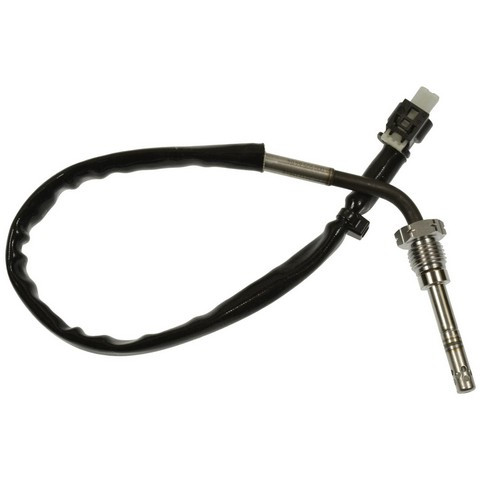
Standard Ignition Exhaust Gas Temperature (EGT) Sensor P/N:ETS61
Standard Motor Products
Standard Ignition ETS169 exhaust gas temperature (egt) sensor for the 2015 Audi Q7 V6 3.0L detects exhaust temperature after the particulate filter. It sends the temperature reading to the vehicle's control module and is a direct-fit replacement.
A warning light or erratic temperature readings can mean the sensor is wearing out. Damaged wiring at the connector is another common source of those signs, so they alone do not prove the sensor is at fault.
This sensor fits the 2015 Audi Q7 V6 3.0L and mounts after the particulate filter.
Fit and size
Build and materials
One exhaust gas temperature sensor. The 2015 Audi Q7 V6 3.0L takes one.
Interchange: EGR510 · EGTA97 · EXT626 · 059906088CC
Product information is for general reference and may contain errors. See our Disclaimer.
This part cross-references / interchanges with the following part numbers:
Does the Standard Ignition ETS169 EGT sensor fit the 2015 Audi Q7 V6 3.0L?
Yes. Standard Ignition ETS169 is a direct-fit replacement for the 2015 Audi Q7 V6 3.0L and sits after the particulate filter.
What connector does this exhaust gas temperature sensor use?
This exhaust gas temperature sensor has one oval, female plug-in connector with two male blade terminals.
How much heat can the ETS169 sensor handle?
Standard Ignition ETS169 is made to withstand extreme vibration and heat up to 2300 °F (1300 °C). It detects temperature within ±10 degrees of actual temperature.
How can I tell if an exhaust gas temperature sensor is failing?
A warning light or erratic temperature readings can be signs. Testing the sensor needs the engine running, so a shop with a scan tool should do it.
Does this sensor replace part number EXT626?
Yes. EXT626 is listed as an interchange number for Standard Ignition ETS169.
No reviews yet — be the first to review this product.
Write a Review
WARNING: These products can expose you to chemicals including lead and phthalates, which are known to the State of California to cause cancer and birth defects or other reproductive harm. For more information go to www.P65Warnings.ca.gov.