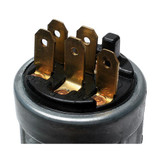
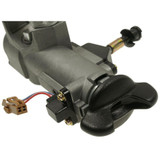
Standard Ignition US1249 ignition lock cylinder for the 2011-2015 Kia Optima takes the key and operates the ignition switch. It replaces a damaged OE unit when the old cylinder has failed.
- Electrically operated ignition lock cylinder with 2 connectors and 10 blade terminals
- Tested for both mechanical and electrical switching performance
- High-grade materials made for the demands of professional service
- Coded lock cylinder
Quick facts
- Part: Standard Ignition US1249 ignition lock cylinder
- Fits: 2011-2015 Kia Optima
- Condition: New
A key that sticks, turns hard or will not turn can mean the lock cylinder is worn. These signs alone do not prove the cylinder is the problem, since a worn or bent key is another common source.
Fits
This is a direct-fit replacement for the 2011-2015 Kia Optima, made to OE spec for fit, form and function. A 2011-2015 Kia Optima takes one.
Specifications
Fit and size
- Quantity per vehicle: 1
- Mounting location: column
- Connectors: 2, male and female
- Terminals: 10, male and female
Build and materials
- Terminal type: blade
- Condition: New
- Country of origin: Taiwan
In the box
One ignition lock cylinder with a mounting bracket and two keys. Mounting hardware and instructions are not included.
Interchange: CS1647 · KS7646 · 819002TD00 · LA10389
Product information is for general reference and may contain errors. See our Disclaimer.
This part cross-references / interchanges with the following part numbers:
CS1647, KS7646, 819002TD00, LA10389, US1249
Frequently Asked Questions
Is the Standard Ignition US1249 ignition lock cylinder right for the 2011-2015 Kia Optima?
Yes. Standard Ignition US1249 is a direct-fit replacement for the 2011-2015 Kia Optima.
Does the Standard Ignition US1249 come with keys?
Yes. Standard Ignition US1249 comes with two keys and a mounting bracket. Mounting hardware and instructions are not included.
How many terminals does this ignition lock cylinder have?
This ignition lock cylinder has 10 blade terminals, male and female, spread across 2 connectors that are also male and female.
Can a key that sticks or will not turn mean a worn ignition lock cylinder?
Yes. A key that sticks or will not turn can be a sign of a worn lock cylinder. A shop can test the ignition if you are unsure.
Is each of these ignition lock cylinders tested?
Yes. Each unit is tested for both mechanical and electrical switching performance.