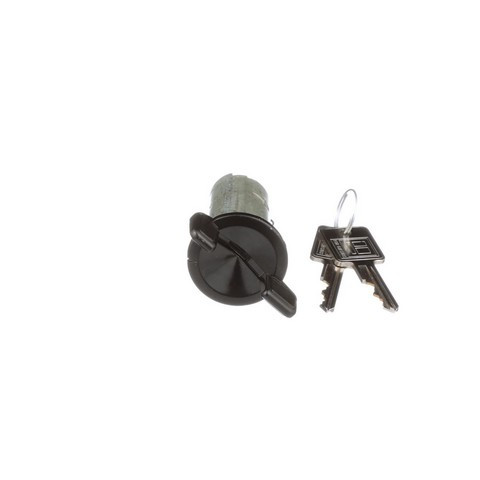
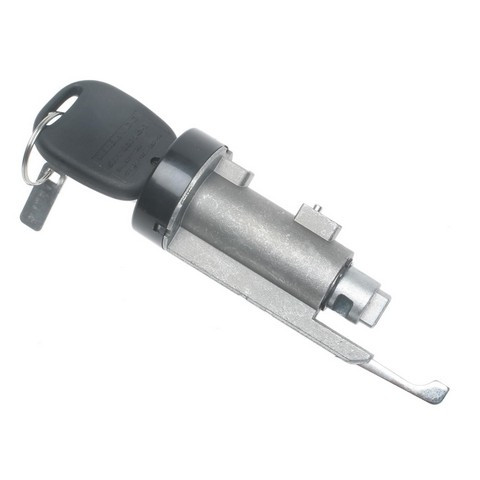
Replace a worn or sticking ignition lock with the Standard Ignition Ignition Lock Cylinder US-117L, a coded, column-mounted cylinder built for precise installation and supplied with two keys. It fits many vehicles, among them the 1988-1994 Chevrolet K1500, 1990 Chevrolet C1500 and 1987-1990 Jeep Wrangler. See the Buyer's Guide tab for the full list.
- Matched to the original: Standard pairs every ignition lock to the original for precision installation.
- Professional-quality construction: Solid brass tumblers, chrome plated brass keys and a die-cast zinc lock core, plus multiple, randomly assigned key codes, are intended to deliver superior operation.
- Aimed at inherent failures: Where original equipment fails, Standard designs its products to address those inherent failure issues.
- Controlled from start to finish: As a global manufacturer of original equipment ignition products, Standard maintains complete quality control from componentry to finished product, backed by decades of research and development focused on what technicians need.
In the box: the coded ignition lock cylinder, two keys and installation instructions. Mounting brackets are not included. The listed applications use one cylinder. Country of origin: Taiwan.
Signs an ignition lock cylinder may need replacing include a key that is hard to insert or turn, a key that sticks in the lock, or a cylinder that feels loose or worn. Diagnose the cause first; if the lock cylinder is at fault, US-117L replaces it.
Interchange: CS132L · ILC134 · KS6641 · 16627130 · 26005043 · 26005718 · 26025788 · 26052796 · 7840574 · LC14300 · KS6641SB · US117LT
This part cross-references / interchanges with the following part numbers:
CS132L, ILC134, KS6641, 16627130, 26005043, 26005718, 26025788, 26052796, 7840574, LC14300, KS6641SB, US117LT