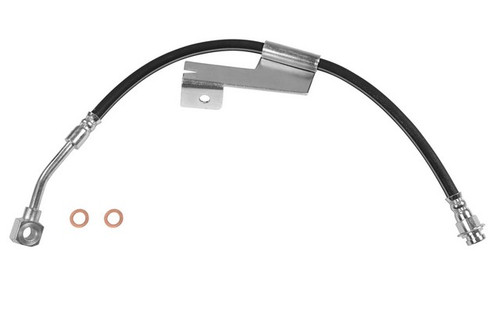
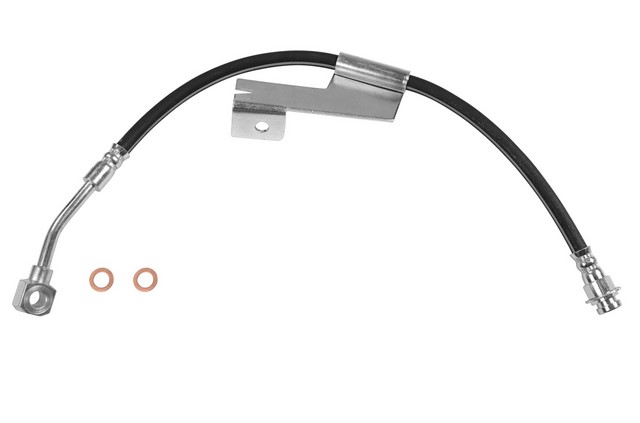
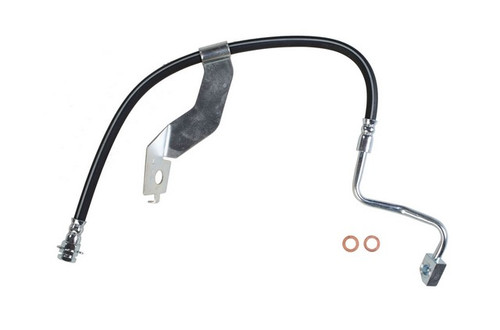
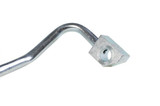
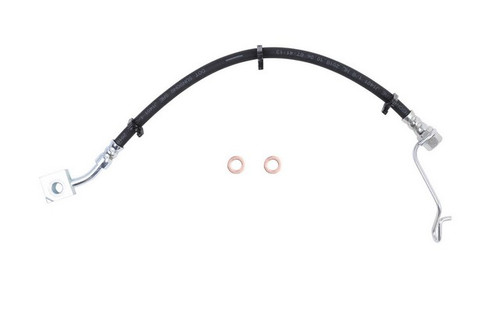
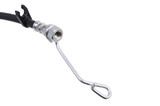
Give your front brakes a fresh, flexible path for pressurized brake fluid with the Sunsong brake hydraulic hose, part number 2201058. Cataloged for the front left position, it fits many vehicles, among them the 1995-2000 Chevrolet C3500, 1995-2000 GMC C3500 and 1989-2000 Chevrolet C2500; see the "Vehicles it fits" section for the full list. The hose carries brake fluid between the vehicle's rigid brake lines and the wheel brake while flexing with steering and suspension movement.
Sunsong is a vertically integrated manufacturer that researches, develops, and builds automotive fluid transfer hoses and lines, and it designs its products for exact form, fit, and function.
- Precision-engineered fit: Built to exact fit, with the brackets, grommets, molded plastic guards, wire clips, and protective sleeves supplied as the application requires, so the wearable pieces are returned to original condition.
- Safety standards: Sunsong's hoses meet or exceed DOT, FMVSS 106, and SAE J1401 standards.
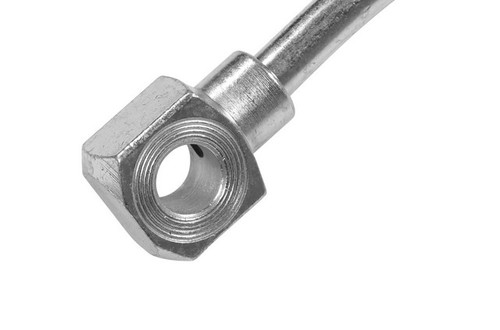
- Zinc-plated steel tubing: The tubing is made from high grade steel and electroplated with a zinc coating. This coating resists corrosion and rust from high humidity, road salt, water, and grime.
- Pressure-tested: Each hose goes through a high-pressure quality assurance test before it leaves the factory. Where a hose uses banjo end fittings, new copper washers are included for sealing.
Signs a brake hose may need replacing: cracking, swelling, or bulging on the hose body, brake fluid seeping at the hose or its fittings, or a soft or spongy brake pedal. Inspect the system to confirm the cause before replacing parts, and bleed the brakes after installation.
See the "Vehicles it fits" section for the full fitment list and engine details.
Interchange: 1474-03185 · 150.66046 · 350-47262
147403185 · 15066046 · 35047262 · 18J1089 · 78258 · BH380248 · SP8999 · BHA380248 · H380248 · 70610 · 22113463 · 380248 · BH116849 · BH133852
Product information is for general reference and may contain errors. See our Disclaimer.
This part cross-references / interchanges with the following part numbers:
18J1089, 2201058, 1474-03185, 78258, BH380248, BHA380248, SP8999, 150.66046, H380248, 70610, 22113463, 380248, 350-47262, BH116849, BH133852
Frequently Asked Questions
Which position does this Sunsong brake hose fit?
It is cataloged for the front left position on the listed Chevrolet and GMC applications.
What standards does this brake hose meet?
Sunsong states its brake hoses meet or exceed DOT, FMVSS 106, and SAE J1401 standards. Each hose is also pressure-tested before it leaves the factory.
Are copper washers included?
Sunsong includes new copper washers with its brake hoses that use banjo end fittings, so the washers are supplied when the hose uses that fitting style.
What are signs a brake hose may need replacing?
Common signs include cracking, swelling, or bulging on the hose, brake fluid seeping at the hose or its fittings, and a soft or spongy pedal. Inspect the system to confirm the cause.
Do I need to bleed the brakes after installing it?
Yes. Opening the hydraulic system lets air in, so bleed the brakes according to the vehicle service information after the new hose is installed.