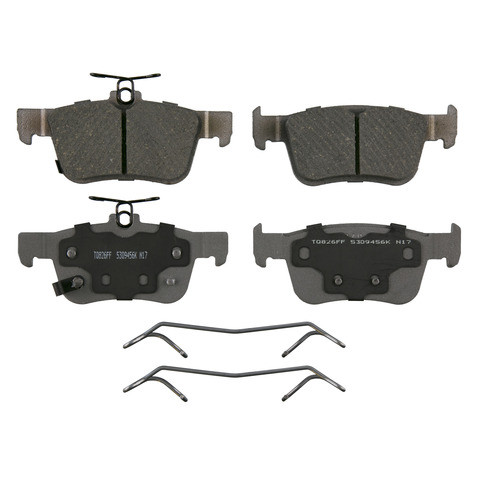
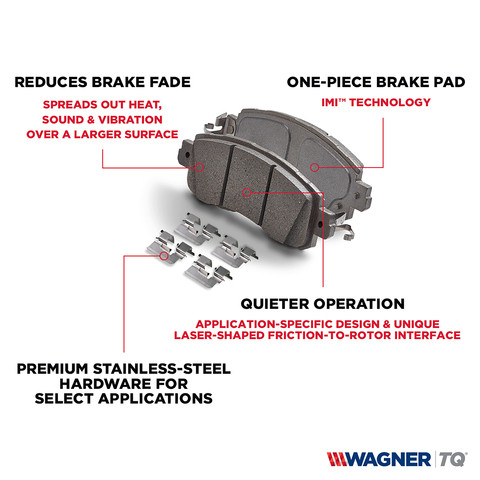
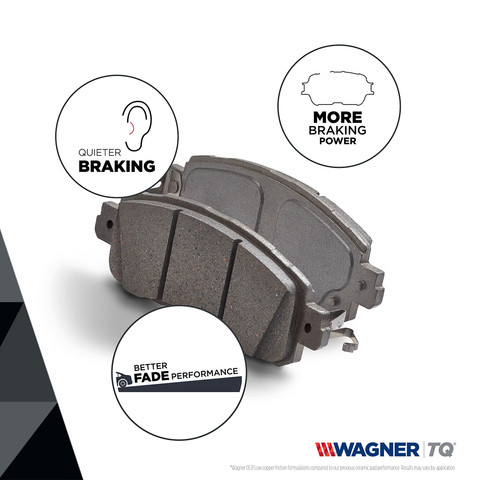
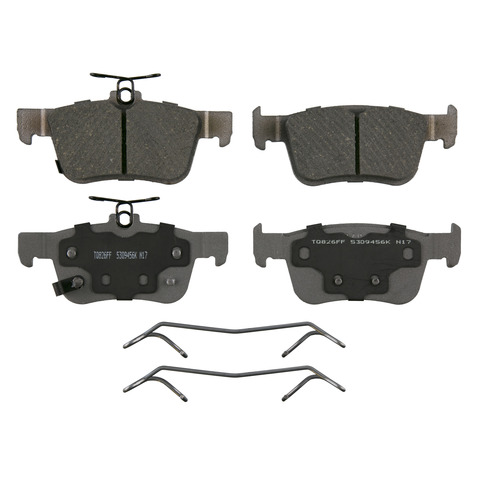
Wagner Brake QC1878 rear brake pad for the 2016-2025 Honda Civic and 2019-2023 Acura RDX is a ceramic pad with Integrally Molded Insulator (IMI™) technology for quieter operation.
- ThermoQuiet line with a ceramic friction material
- Zero-copper friction formulation, Wagner OE25™
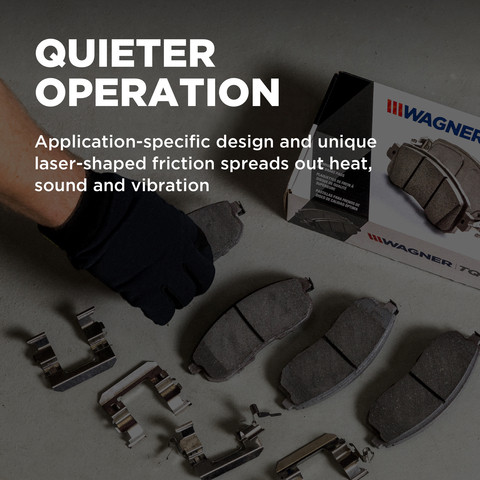
- Application-specific design and laser-shaped friction spread out heat, sound and vibration to reduce noise opportunities
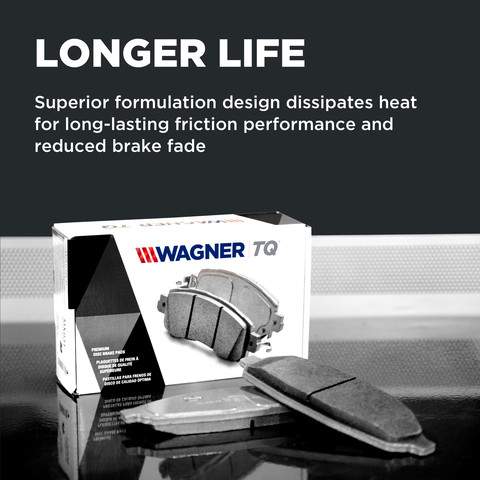
- The formulation dissipates heat to reduce brake fade
- Reduced rotor wear, which helps cut down brake dust for cleaner wheels
A squeal or grind from the rear brakes can mean these pads are worn, though a sticking caliper or a damaged rotor can also make noise. The rear axle takes one set, which covers the pads at both rear wheels, so replace the left and right sides together.
It is a direct-fit replacement on the rear axle of both cars, and works as an Acura RDX brake pad from 2019 through 2023.
Specifications
Fit and size
- Position: rear
- Quantity per application: 1
Build and materials
- Type: ceramic disc brake pad set
- Slotted: yes
- Chamfered edges: no
- Country of origin: United States
In the box
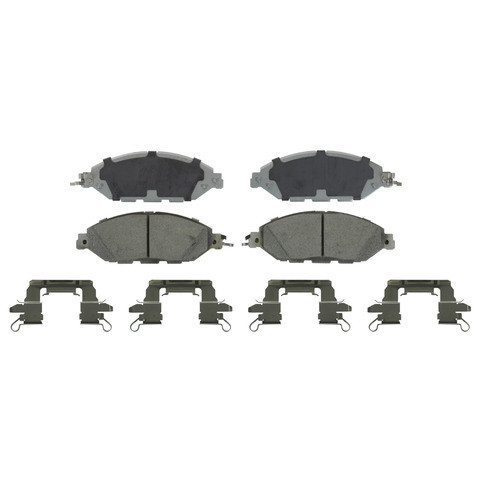
A mechanical pad wear sensor, pad shims and abutment clips come with the pads.
Interchange / FMSI:
FMSI: 9016-D1878 · D1878
Product information is for general reference and may contain errors. See our Disclaimer.
Frequently Asked Questions
Do these 2017 Honda Civic brake pads from Wagner fit the rear axle?
Yes. Wagner Brake QC1878 is a rear brake pad for the 2016-2025 Honda Civic, which covers 2017, and for the 2019-2023 Acura RDX.
Does this brake pad replacement for the 2016-2025 Honda Civic come with brake discs?
No. This listing is one rear brake pad set, and brake discs for the 2016-2025 Honda Civic are sold separately.
What hardware comes with the Wagner ThermoQuiet QC1878 pads?
The set includes a mechanical pad wear sensor, pad shims and abutment clips, so those pieces ship together with the pads.
Are Wagner ThermoQuiet pads copper-free?
Yes. Wagner Brake QC1878 uses the Wagner OE25™ zero-copper friction formulation, and its friction material is ceramic.
How does IMI™ technology make these brake pads quieter?
IMI™ stands for Integrally Molded Insulator, a technology Wagner uses for quieter operation. The laser-shaped friction and application-specific design also disperse heat, sound and vibration.