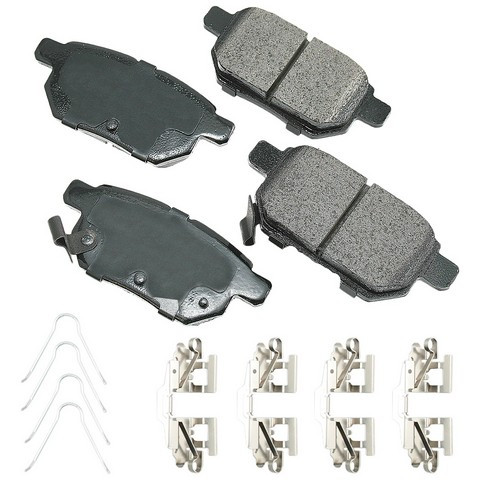
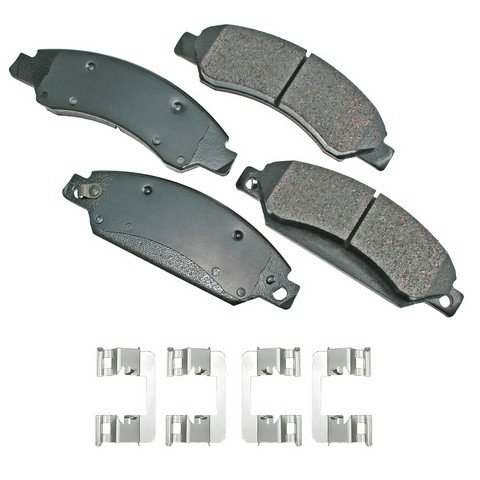
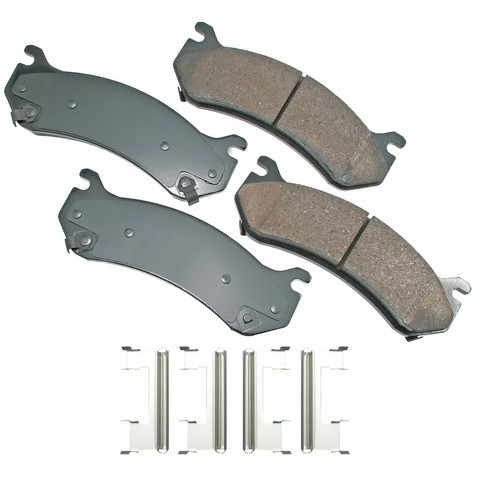
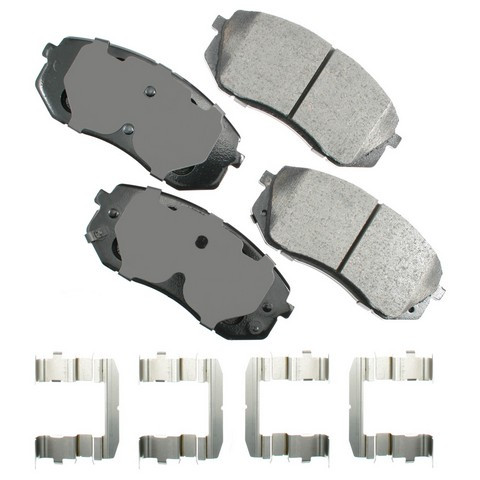
Designed for quiet, low-dust everyday stopping, the Akebono ProACT ultra-premium ceramic brake pads, part number ACT1354B, bring OE-validated ceramic friction to the rear axle. They are listed for several Toyota models, among them the 2014-2020 Toyota Corolla, 2010-2022 Toyota Prius and 2019-2022 Toyota Prius AWD-E.
- Application-specific ceramic formulations: OE-validated ceramic compounds with integrally molded friction material.
- Precision-cut pressure plates: Paired with scientifically engineered chamfers and slots, aimed at braking performance and NVH (noise, vibration and harshness) control.
- Hardware in the box: This rear disc brake pad set includes abutment clips and a mechanical pad wear sensor. Brake lubricant is not included.
- Everyday comfort: Designed for whisper-quiet stops and ultra-low dust compared to conventional semi-metallic pads, with a smooth, consistent pedal feel during everyday street driving.
Akebono Brake Corporation describes itself as the originator of ceramic brake technology. It is the original equipment brake brand on many models in total, and its friction development centers on NVH analysis and control. The Akebono Group runs technical and R&D centers in Japan, the United States and France. Country of origin: United States.
If you need rear 2010 Toyota Corolla brake pads, the 2009-2011 Corolla entry covers that year. The listed applications use one set.
Signs your rear pads may need replacing include squealing or grinding when braking, a longer stopping distance, or visibly thin friction material. Inspect the brake system to confirm the cause before replacing parts.
See the Buyer's Guide tab for every listed vehicle.
Interchange: 8463-D1354 · 8463D1354 · 8463-D1423 · 8463D1423 · 8846-D1354 · 8846D1354
This part cross-references / interchanges with the following part numbers:
8463-D1354, 8463-D1423, 8846-D1354