

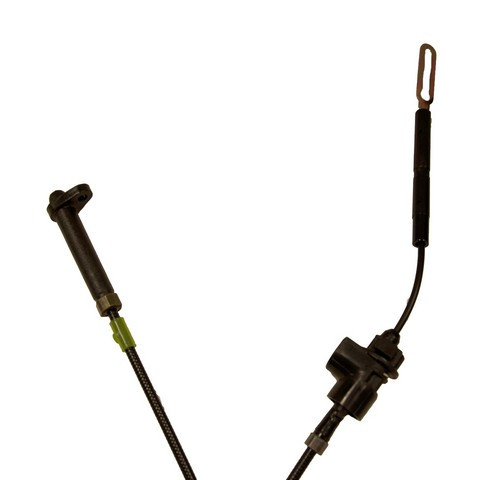
ATP Automatic Transmission Detent Cable P/N:Y-752
ATP Universal Fit Detent Cables are designed to cover many applications and are no compromise replacement parts
$35.99


Reconnect the throttle mechanism to your automatic transmission with the ATP Automatic Transmission Detent Cable Y-228 (also written Y228). The detent cable links the throttle mechanism to the transmission, and over time an old cable can bind, break, or simply become sluggish — replacing the worn cable with a new one is the recommended repair. It installs as a direct-fit replacement across a wide range of 1981-1998 GM cars, vans, and trucks, including the 1981 Chevrolet Monte Carlo, 1982-1986 Chevrolet K5 Blazer, 1983-1987 Chevrolet Camaro, 1982-1990 Chevrolet Caprice, and 1986-1990 Chevrolet Astro / GMC Safari. See the Buyer's Guide tab for the full list of 121 applications.
Interchange: CA-1970
63433 · CE45 · DC114 · 4217 · 4225 · 10066487 · 10066501 · 10066510 · 14102146 · 25507544 · 25507551 · 25507553 · 25509561 · 25515598 · 25516234 · 25521268 · 17909 · CB1030 · CA1970
This part cross-references / interchanges with the following part numbers:
What does the ATP Y-228 detent cable do?
It connects the throttle mechanism to the automatic transmission, relaying throttle position to the transmission through the cable.
How do I know my detent cable needs replacing?
Old cables can bind, break, or become sluggish. If a worn or broken detent cable is the cause of your issue, this replaces it — diagnose the cause before ordering.
Is the Y-228 a direct replacement?
Yes. It is designed to fit and function just like the original part on the listed applications and installs as a direct-fit replacement.
Will this cable fit my vehicle?
It fits many 1981-1998 GM cars, vans, and trucks. Check the Buyer's Guide tab against your exact year, make, and model to confirm fitment.
Which part numbers does this cable interchange with?
It replaces CA-1970, 63433, CE45, DC114, 4217, 4225, CB1030, 17909, and several GM numbers including 10066487, 14102146, and 25521268. See the full interchange list above.




WARNING: These products can expose you to chemicals including lead and phthalates, which are known to the State of California to cause cancer and birth defects or other reproductive harm. For more information go to www.P65Warnings.ca.gov.
