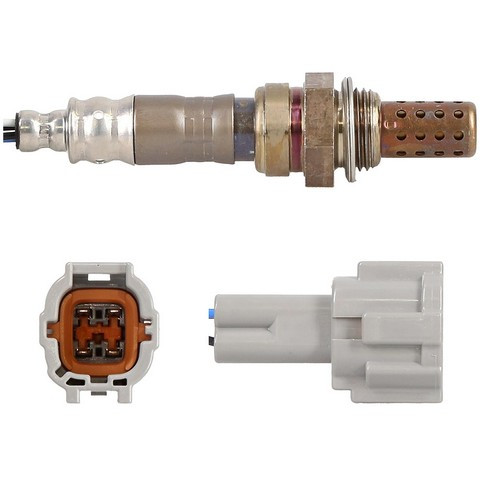
DENSO Auto Parts 234-4354 oxygen sensor for the 2005-2006 Acura RSX 4-cylinder 2.0L measures the oxygen in the exhaust and reports it to the engine computer. It is a heated, downstream sensor with a threaded mount.
- Laser-welded stainless housing that resists corrosion
- PTFE filter that blocks contaminants under harsh engine conditions
- Dual-layer protection around the ceramic element for fast, reliable response times
- Aluminum oxide trap layer that protects the ceramic element from silicone and lead poisoning
Quick facts
- Part: DENSO Auto Parts 234-4354 oxygen sensor
- Fits: the 2005-2006 Acura RSX 4-cylinder 2.0L
- Position: Downstream
- Condition: New
An oxygen sensor wears with use, and a check engine light, rough running or lower fuel economy can be signs that it is failing. Before you replace it, rule out an exhaust leak near the sensor and a damaged wire or connector, since either one can set off similar symptoms.
Fits
This is a direct-fit replacement for the downstream position on the 2005-2006 Acura RSX 4-cylinder 2.0L (L4-2.0L).
Specifications
Fit and size
- Position: Downstream
- Quantity per vehicle: 1
- Mounting type: Threaded
- Thread diameter: 0.708 in
- Wiring harness length: 20.08 in
- Wire quantity: 4
- Connector gender: Female
Build and materials
- Sensor type: Heated, narrow-band
- Housing: Laser-welded stainless
- Condition: New
- Country of origin: United States
In the box
This listing is one downstream oxygen sensor, and the 2005-2006 Acura RSX 4-cylinder 2.0L takes one.
Product information is for general reference and may contain errors. See our Disclaimer.
This part cross-references / interchanges with the following part numbers:
213-3027, 15408, 15948, ES20215, 36532PNDA11, 36532PNDA21, 36532PRBA11, 24254, SG1748, SG1757, 250-24446, 350-34230
Frequently Asked Questions
Is this downstream oxygen sensor right for the 2005-2006 Acura RSX 4-cylinder 2.0L?
Yes. DENSO Auto Parts 234-4354 is a downstream oxygen sensor for the 2005-2006 Acura RSX 4-cylinder 2.0L (L4-2.0L), and that car takes one.
Is the DENSO 234-4354 oxygen sensor heated, and how many wires does it have?
Yes. The DENSO 234-4354 is a heated, narrow-band sensor with four wires, a female connector and a 20.08 in wiring harness.
What thread size does this downstream oxygen sensor have?
This sensor has a threaded mount with a thread diameter of 0.708 in.
What protects the ceramic element inside this oxygen sensor?
A dual-layer shield surrounds the ceramic element, and an aluminum oxide trap layer is designed to guard it against silicone and lead poisoning.
What can a failing downstream oxygen sensor do to how my car runs?
It can bring on a check engine light, rough running or lower fuel economy. A shop can scan the codes and test the sensor to confirm.