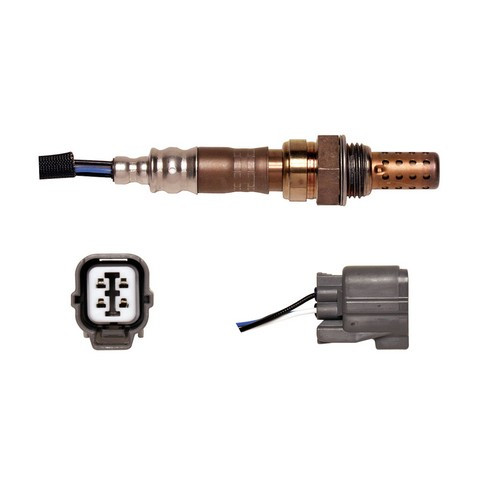
DENSO Auto Parts 234-4620 oxygen sensor for the 1994-1997 Honda Accord 4-cylinder 2.2L, the 1998-2002 Accord 4-cylinder 2.3L and other vehicles measures the oxygen in the exhaust and reports it to the engine computer. It is a heated, narrow-band sensor.
- Laser-welded stainless housing that resists corrosion
- PTFE filter that blocks contaminants in harsh engine conditions
- Dual-layer protection around the ceramic element for fast, reliable response times
- Aluminum oxide trap layer designed to protect the ceramic element from silicone and lead poisoning
Quick facts
- Part: DENSO Auto Parts 234-4620 oxygen sensor
- Fits: the 1994-1997 Honda Accord 4-cylinder 2.2L, the 1998-2002 Accord 4-cylinder 2.3L and other vehicles
- Position: upstream, downstream
- Condition: New
A check engine light, a rougher idle or poorer fuel economy can mean the oxygen sensor is worn, though an exhaust leak or a weak spark plug can be behind the same symptoms, so find the cause before you replace it.
Fits
This is a direct-fit O2 sensor for the 1994-1997 Honda Accord 4-cylinder 2.2L (L4-2.2L), the 1998-2002 Accord 4-cylinder 2.3L (L4-2.3L) and the 2001 Honda Insight 3-cylinder 1.0L (L3-1.0L). It is listed for the upstream and downstream positions. This listing is one sensor, and each position takes one.
Specifications
Fit and size
- Position: upstream, downstream
- Quantity per vehicle: 1
- Thread diameter: 0.708 in
- Wiring harness length: 11.42 in
- Wires: 4
Build and materials
- Sensor type: narrow-band, heated
- Mounting type: threaded
- Connector gender: female
- Condition: New
- Country of origin: United States
Product information is for general reference and may contain errors. See our Disclaimer.
This part cross-references / interchanges with the following part numbers:
213-1481, OS1666, OS834, 13075, ES20141, 36531P0BA01, 36531PAA305, 36531PAAA01, 36532PHMA11, 24042, 24427, 24655, SG1860, 250-24620, 350-34631
Frequently Asked Questions
Is this oxygen sensor right for the 1998-2002 Honda Accord 4-cylinder 2.3L?
Yes. DENSO Auto Parts 234-4620 is listed for the 1998-2002 Honda Accord 4-cylinder 2.3L (L4-2.3L), and each position takes one sensor.
Will this O2 sensor work on a 2002 Honda Accord 4-cylinder 2.3L?
Yes. The year 2002 falls inside the 1998-2002 Honda Accord 4-cylinder 2.3L (L4-2.3L) fitment for this sensor.
How long is the wire on the DENSO 234-4620 oxygen sensor?
DENSO Auto Parts 234-4620 has an 11.42-inch wiring harness with four wires and a female connector.
What protects the ceramic element in this oxygen sensor?
A PTFE filter blocks contaminants, and dual-layer protection shields the element. An aluminum oxide trap layer is designed to guard against silicone and lead poisoning.
How can I tell if my oxygen sensor is failing?
A check engine light, a rougher idle or poorer fuel economy can be signs. A shop can scan the codes and test the sensor to confirm.