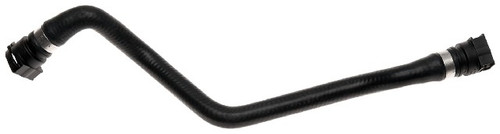
Gates HVAC Heater Hose P/N:23258
Gates 19200 heater hose for the 2004 Ford F550 Super Duty truck and other vehicles carries coolant between the engine and the heater.
A coolant leak, a soft or swollen hose or a heater that blows cool can mean this hose is worn, though a worn clamp or a leaking heater core can be the source, so find the cause first. If the hose is the cause, this Gates molded heater hose replaces it.
This heater hose also fits the 1999-2003 Ford F-250 Super Duty V8 7.3L and the 1999-2003 Ford F-350 Super Duty V8 7.3L, and each takes one. If your vehicle is not named here, find it in the "Vehicles it fits" section on this page.
Fit and size
Build and materials
Interchange: F81H 18K579 MA · F81Z 18472 MA · F81Z 18472 MAA
18191L · 87790 · 87889 · E87790 · E87889 · 64385 · KH260 · 11200
Product information is for general reference and may contain errors. See our Disclaimer.
This part cross-references / interchanges with the following part numbers:
Is the Gates 19200 a Ford F-250 Super Duty heater hose for the 1999-2003 V8 7.3L?
Yes, Gates 19200 is listed for the 1999-2003 Ford F-250 Super Duty V8 7.3L, which takes one hose; for any other vehicle, look in the "Vehicles it fits" section.
What temperature range can this HVAC heater hose handle?
The Gates 19200 has a temperature range of -40°F to 275°F (-40°C to 135°C). It meets SAE 20R3 Type EC Class D-1 and D-2 and has an EPDM tube and cover.
How long is this heater hose and what is its inside diameter?
This heater hose measures 44.7 in (1135 mm) along the centerline. The inside diameter is 16 mm (.63 in) at both ends.
Can this heater hose be used for fuel or oil lines?
No. This hose is for coolant, water and air applications, and it is not for fuel or oil transfer.
Should I replace the hose clamps when installing this heater hose?
Yes. Replace the hose clamps each time a new coolant hose is installed.
No reviews yet — be the first to review this product.
Write a Review
WARNING: These products can expose you to chemicals including lead and phthalates, which are known to the State of California to cause cancer and birth defects or other reproductive harm. For more information go to www.P65Warnings.ca.gov.