Sold out




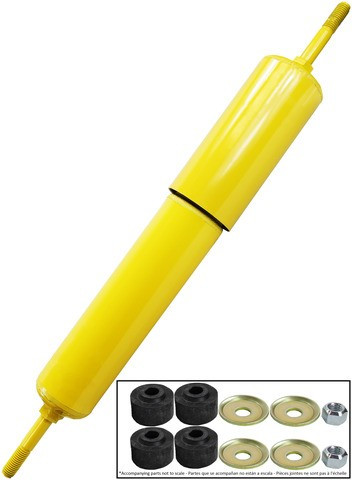
Help keep the rear of your classic Chevrolet or Pontiac settled and under control with the Monroe shock absorber 210121 from the Monroe Restore line. This rear unit is a direct-fit replacement for the 1970-1981 Chevrolet Camaro and the 1970-1981 Pontiac Firebird. It is designed for consistent performance and a high level of handling and control, and it filters out noise, vibration and harshness.
A suspension shock absorber dampens the up-and-down motion of the springs, which helps keep the tires in contact with the road. Signs that a shock may need replacing include:
For engine-specific application details, see the Buyer's Guide tab.
Interchange: TS3432552B · TS3432862B · 43084 · 69624 · 81095 · 343131 · KG5526 · GM137 · 32112 · 55831 · 5831 · 94019 · NS5831 · 12130665
This part cross-references / interchanges with the following part numbers:
What vehicles does the Monroe 210121 fit?
It is listed for the rear of the 1970-1981 Chevrolet Camaro and the 1970-1981 Pontiac Firebird. See the Buyer's Guide tab for engine and application details.
Is this a Monroe rear shock absorber?
Yes. The 210121 is cataloged for the rear position on the listed applications.
What does the nitrogen gas charge do?
It is designed to reduce aeration and shock fade. This helps keep the tires in contact with the road for improved ride and handling.
What are signs my shocks may need replacing?
Common signs include excessive bouncing after bumps, fluid leaking from the shock body, bottoming out and uneven tire wear. Other suspension parts can cause similar symptoms, so diagnose the cause before replacing.
Should I replace shocks in pairs?
Replacing both shocks on the same axle together is commonly recommended for balanced ride and handling. A new shock paired with a worn one can feel uneven.



WARNING: These products can expose you to chemicals including lead and phthalates, which are known to the State of California to cause cancer and birth defects or other reproductive harm. For more information go to www.P65Warnings.ca.gov.
