


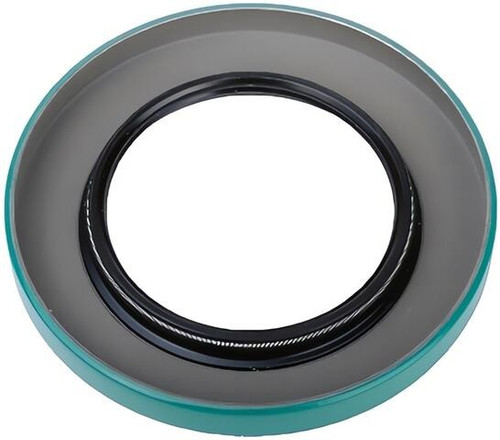

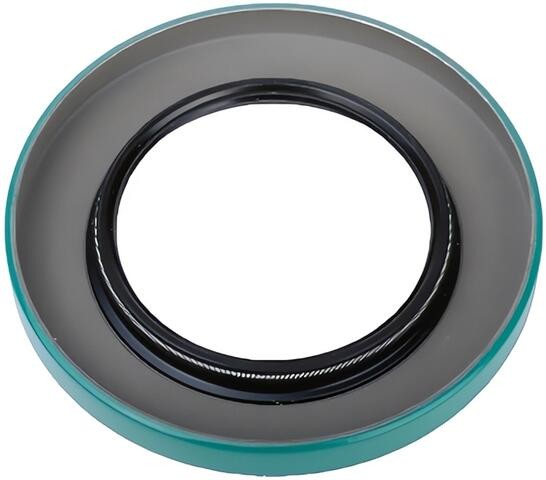
Keep transfer case lubricant sealed in and road grime out with the SKF Transfer Case Output Shaft Seal 17523. It installs as a direct-fit replacement for the 1974-1976 Ford F-250 (see the Buyer's Guide tab for engine details), seated in the rear output shaft position where its stationary body holds firm while the lip rides on the rotating shaft to retain fluid.
- Contaminant protection: designed to guard against dirt and water intrusion at the shaft.
- Cold-drawn steel garter spring: uses cold-drawn steel wire to help maintain fluid retention.
- Deep-drawn steel case: a deep-drawn sheet steel body forms a rigid, stress-resistant metal case.
- Quality build: made with tested design and materials for correct fit.
SKF has been a leader in seal design since inventing the first integrated shaft seal in 1928, building seals to specific designs to suit the application and its environment. If a worn or leaking original output shaft seal is the cause of fluid seepage where the shaft exits the transfer case, this replaces it.
Interchange: CHR 17523 · D3049 · D3049P · 744953 · 2238917 · 6773249 · 192527C1 · 125918H1 · 54214D · 54215D · 698447R91 · 13001 · A1805R330 · 62370 · 814686
This part cross-references / interchanges with the following part numbers:
Frequently Asked Questions
What vehicles does this SKF seal 17523 fit?
It is a direct-fit replacement for the 1974-1976 Ford F-250. Check the Buyer's Guide tab to confirm the fit for your specific vehicle.
Where is this seal located?
It seals the rear output shaft where the shaft exits the transfer case, keeping lubricant in and dirt and water out.
Does the seal rotate with the shaft?
No. The seal body stays stationary in its bore while its lip contacts the rotating output shaft to retain fluid.
What is the seal made of?
It has a deep-drawn sheet steel body that forms a rigid, stress-resistant metal case, plus a garter spring made from cold-drawn steel wire.
How do I know if this seal needs replacing?
Signs may include fluid seepage or leakage where the output shaft exits the transfer case. Diagnose the cause first, since leaks can have other sources.
Write a Review