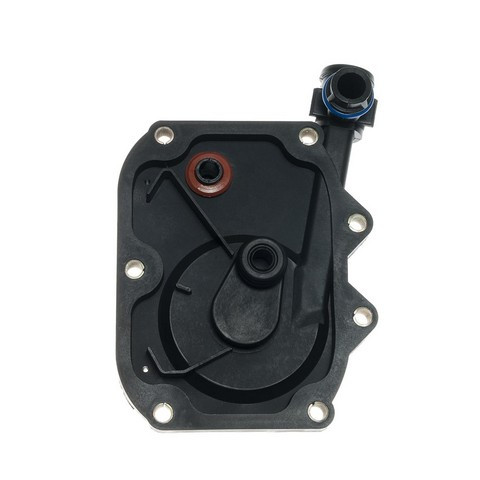


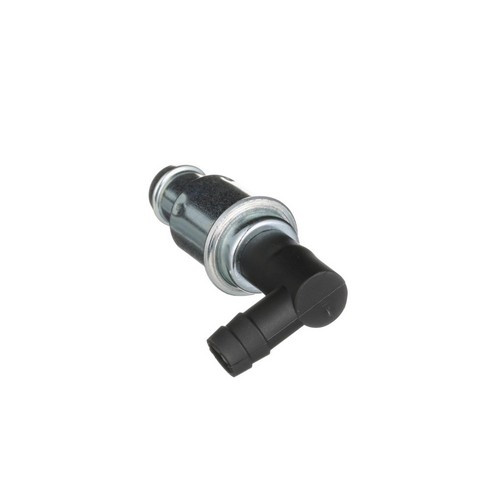


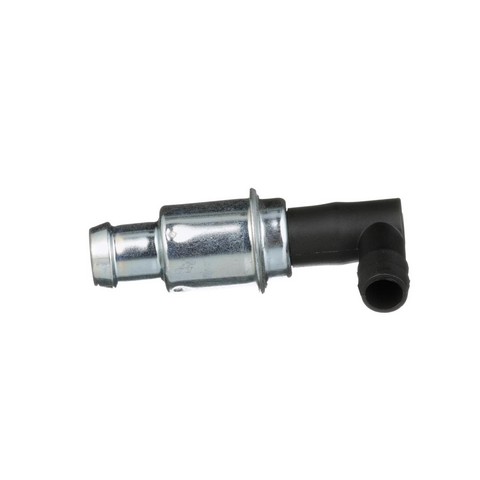
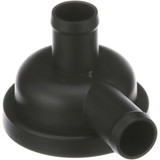
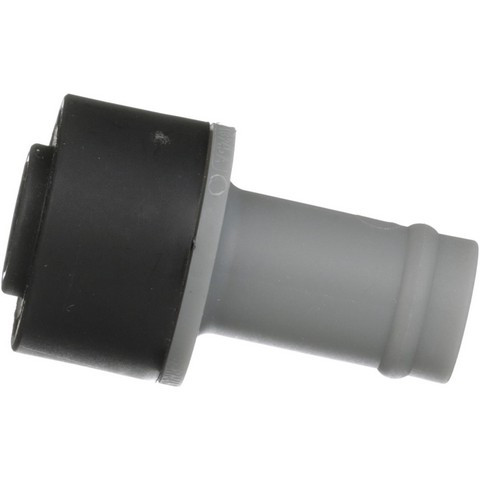
Keep crankcase vapors moving through their intended path with the Standard Ignition PCV Valve V180, a push-on positive crankcase ventilation valve that meters blow-by gases from the crankcase into the intake manifold so they are burned in the engine. It fits many vehicles, among them the 1966-1969 Dodge Charger, 1977-1979 Chevrolet Impala and 1975 Chevrolet Malibu, as a direct-fit replacement for the listed applications. See the Buyer's Guide tab for the full list.
Signs a PCV valve may need replacing include rough idle, oil leaking past seals and gaskets, or heavier oil consumption. Other faults can cause the same symptoms, so diagnose the cause first; if a stuck PCV valve is the cause, the V180 replaces it.
The package contains the valve only. Gaskets, a mounting bracket and a cap are not included. The listed applications use one valve. Country of origin: Mexico.
Interchange: 2-9209 · 3-9209
PCV209 · 2808622 · MO4777240 · MO5214088 · 6422423 · 6487936 · 29209 · 39209
This part cross-references / interchanges with the following part numbers:
What does a PCV valve do?
It meters crankcase blow-by gases into the intake manifold so they are burned in the engine instead of building pressure in the crankcase.
Is this the right Chevy Malibu PCV valve for a 1975 model?
V180 is listed as a direct-fit replacement for the 1975 Chevrolet Malibu with the L6-4.1L engine. The Buyer's Guide tab lets you confirm your exact vehicle.
Is this the right Dodge Charger PCV valve?
It is listed for the 1966-1969 Dodge Charger across several engine options, and also for the 1977-1979 Chevrolet Impala. The Buyer's Guide tab shows each engine code.
What comes in the box?
The valve only. Gaskets, a mounting bracket and a cap are not included, and the listed applications use one valve.
What hose sizes does it connect to?
It has two push-on hose connectors with an angled nipple orientation, sized for 3/8 in and 7/16 in hose, with a 0.44 in inlet and a 0.3 in outlet.




WARNING: These products can expose you to chemicals including lead and phthalates, which are known to the State of California to cause cancer and birth defects or other reproductive harm. For more information go to www.P65Warnings.ca.gov.
