


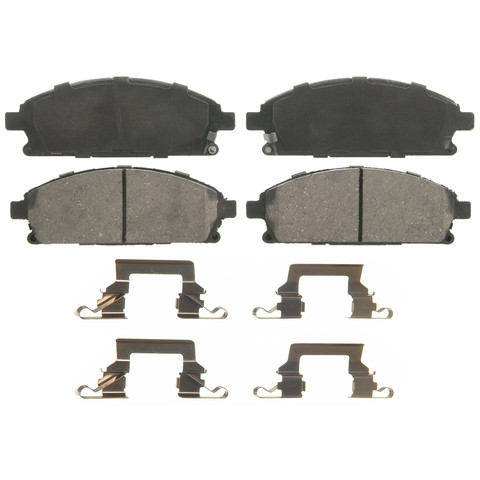



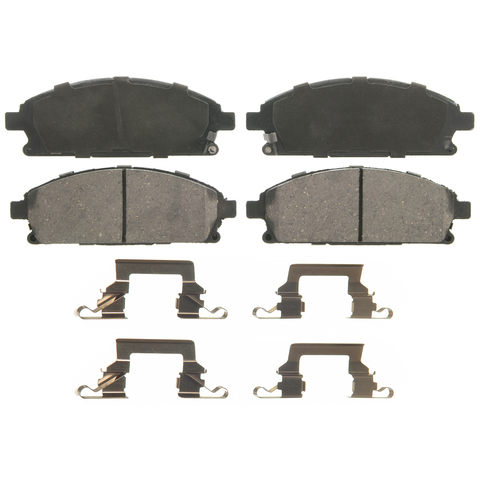
Quiet, low-dust stopping for daily driving — the Wagner Brake QuickStop ZD691 Ceramic Disc Brake Pad Set drops in as a front-axle direct-fit replacement for the 1996-2004 Nissan Pathfinder, 1997-1999 Infiniti Q45, 1997-2003 Infiniti QX4, 2003-2006 Acura MDX, and 2017 Nissan Quest (All engines). Its ceramic friction material is engineered for a smooth, consistent pedal feel with lower, less-visible dust and quieter operation than conventional semi-metallic pads during everyday street driving.
- Ceramic, zero-copper friction: features Wagner's OE25 zero-copper friction formulation, developed with a 100% post-cure process for even friction performance throughout the life of the pad.
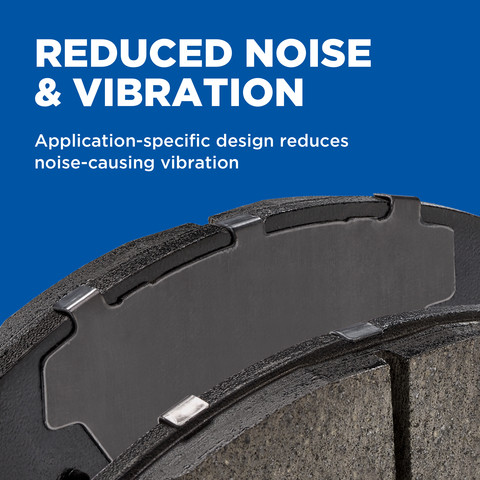
- Application-specific, noise-reducing design: slotted with chamfered edges and an OE fit-and-form design to help reduce noise-causing vibration for consistent braking.
- Included hardware: pad shims, abutment clips, and a mechanical pad wear sensor are included; premium stainless-steel hardware and OE-style lubricant are included in most applications.
- Made in the United States.
Interchange: FMSI 7566-D691 · 7566D691. Manufacturer part number ZD691.
This part cross-references / interchanges with the following part numbers:
Frequently Asked Questions
Will this pad set fit my vehicle?
It's a front-axle direct-fit for the 1996-2004 Nissan Pathfinder, 1997-1999 Infiniti Q45, 1997-2003 Infiniti QX4, 2003-2006 Acura MDX, and 2017 Nissan Quest (All engines). Check the Buyer's Guide tab.
Are these ceramic or semi-metallic pads?
Ceramic, using Wagner's OE25 zero-copper friction formulation. Ceramic pads run cleaner (lower, less-visible dust) and quieter than semi-metallic pads for everyday street driving.
Is mounting hardware included?
Pad shims, abutment clips, and a mechanical pad wear sensor are included. Premium stainless-steel hardware and OE-style lubricant are included in most applications.
Is this a front or rear set?
Front. The catalog lists this as a front disc brake pad set.
Should I replace both sides at once?
Best practice is to replace the pads on both wheels of the axle together as a matched set for even, balanced braking. Inspect the rotors while you have the brakes apart.