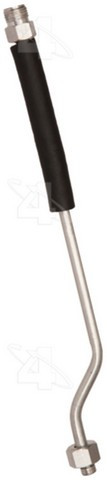
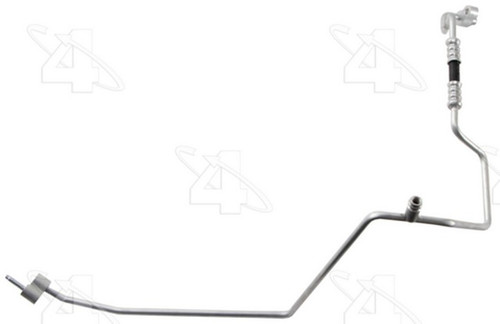
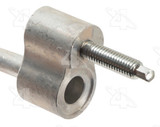
Four Seasons 55929 a/c refrigerant liquid hose for the 1995-1997 Honda Accord and other vehicles is a liquid line hose assembly that carries refrigerant through the A/C system and connects with crimp fittings.
- Engineered and tested by Four Seasons, with over 50 years of mobile a/c experience behind it
- Double wall barrier hose construction
- Compatible with R1234YF, R134A or R12 refrigerant
- Crimp fitting connection
- Application specific design
Oily residue at a hose end or fitting, or an A/C that blows warm, can mean the liquid line is leaking. Before you replace the hose, rule out the other places weak cooling can come from, such as a leaking condenser or compressor, because this hose will not fix those. A shop can test the system to find the source.
It is a direct-fit replacement for the 1995-1997 Honda Accord and the 1997-1999 Acura CL.
Specifications
Fit and size
- Connection: crimp fitting
- Design: application specific
Build and materials
- Type: liquid line hose assembly
- Construction: double wall barrier hose
- Compatible refrigerants: R1234YF, R134A or R12
In the box
The liquid line hose assembly with gaskets, o-rings or seals for the replacement. Not included: orifice tube.
Interchange: 80212SV1A21 · 201119 · T55929 · 791042 · 802746 · 4812156 · 80212SV1A11 · A70545 · HA10962C
This part cross-references / interchanges with the following part numbers:
80212SV1A21, 201119, T55929, 791042, 55929, 802746, 4812156, 80212SV1A11, A70545, HA10962C
Frequently Asked Questions
Does the Four Seasons 55929 liquid hose fit a 1997-1999 Acura CL?
Yes. Four Seasons 55929 fits the 1997-1999 Acura CL and also the 1995-1997 Honda Accord.
Which gaskets or seals come with the Four Seasons 55929 liquid line hose?
Four Seasons 55929 comes with gaskets, o-rings or seals for the replacement. An orifice tube is not included.
Is this liquid line hose compatible with R134A and R1234YF?
Yes. This hose is a double wall barrier hose compatible with R1234YF, R134A or R12 refrigerant.
Is this A/C liquid hose universal or made for specific vehicles?
It is an application specific design, not a universal hose. It connects with a crimp fitting connection.
What does a leaking A/C liquid hose look like?
Oily residue near a hose end or fitting, or air that stays warm, can mean the liquid line is leaking. A shop can pressure-test the system to find the leak.