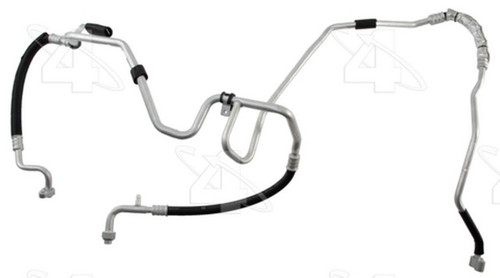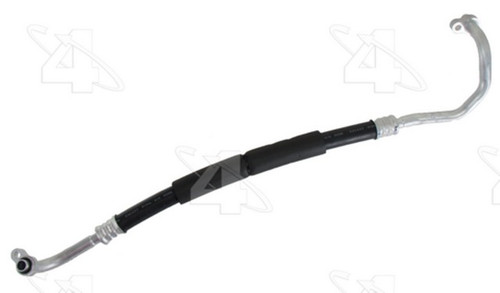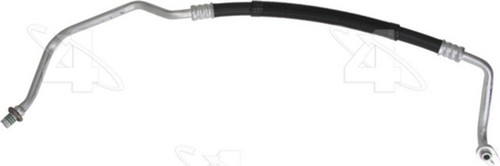
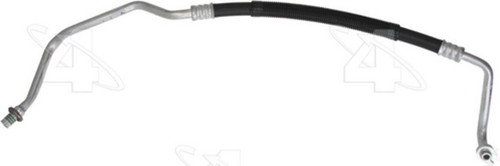
Four Seasons A/C Refrigerant Suction Hose P/N:56075
Four Seasons 56527 a/c refrigerant suction hose for the 1995-2000 Dodge Stratus and other vehicles carries refrigerant back to the compressor on the low-pressure side of the A/C system. It is sold as a suction line hose assembly.
Weak cooling or oily residue around the hose and its fittings can mean this hose is worn or leaking, though a tired compressor or a clogged condenser can also be behind weak cooling, so find the cause before you replace anything.
Among the vehicles it fits are the 1995-2000 Chrysler Cirrus and the 1997-2000 Chrysler Sebring. If your car isn't named here, search for its year and engine in the Buyer's Guide tab.
The hose assembly with gaskets, o-rings or seals.
Interchange: 1534177 · CWK785078 · 282056 · 4596146 · 3785078 · 785078 · 11156527 · 19187721 · 304433 · 4811943 · A82056 · 570450 · T56527 · HA111404 · HA111404C · HA111652C
This part cross-references / interchanges with the following part numbers:
Does the Four Seasons 56527 suction hose fit a 1995-2000 Dodge Stratus?
Yes, Four Seasons 56527 fits the 1995-2000 Dodge Stratus and also the 1995-2000 Chrysler Cirrus. For any other car, search its year and engine in the Buyer's Guide tab.
Does the Four Seasons 56527 suction hose come with gaskets, o-rings or seals?
Yes, Four Seasons 56527 contains gaskets, o-rings or seals to replace the old ones when the hose is changed.
Can this A/C suction hose be used with R1234YF refrigerant?
Yes, the double wall barrier hose is compatible with R1234YF, R134A or R12.
How are the ends of this A/C suction hose attached?
The Four Seasons 56527 uses a crimp fitting connection and is an application specific design, so the hose comes as a finished assembly.
How can I tell if my A/C suction hose is leaking?
With the engine off and cool, look for oily residue or wetness on the hose and around its fittings. A shop can pressure-test the A/C system to confirm a leak.
WARNING: These products can expose you to chemicals including lead and phthalates, which are known to the State of California to cause cancer and birth defects or other reproductive harm. For more information go to www.P65Warnings.ca.gov.