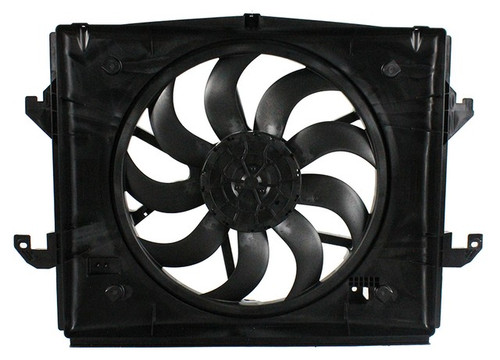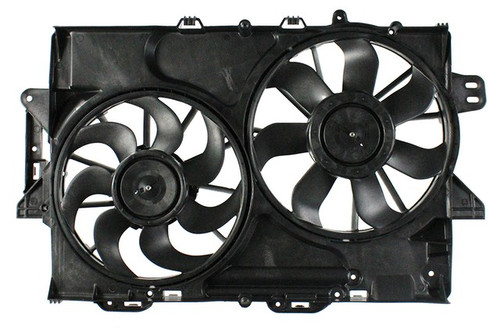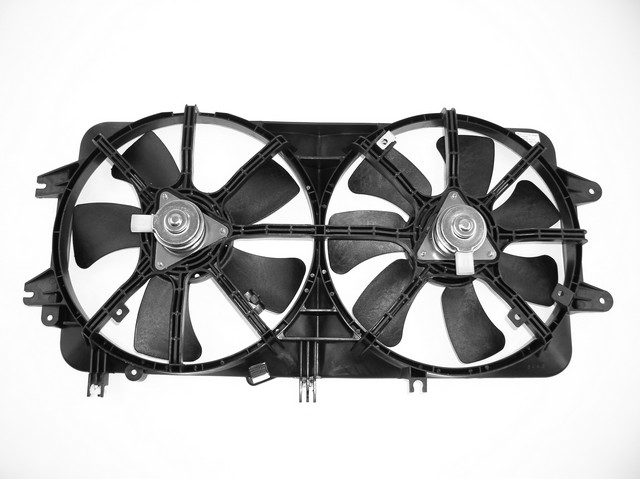
Agility Autoparts Dual Radiator and Condenser Fan Assembly P/N:6026125
Agility 6028115 dual radiator and condenser fan assembly for the 2000-2002 Mazda 626 4-cylinder 2.0L pulls air through the radiator and condenser. Two fans sit in one plastic shroud.
An engine temperature that climbs in traffic, weak A/C at a stop or a fan that stays still can mean this assembly is worn, though a failed fan relay or a bad coolant temperature sensor can be behind the same signs. If the fan assembly is the cause, this one replaces both fans together.
This is a direct-fit replacement for the 2000-2002 Mazda 626 4-cylinder 2.0L, which takes one assembly. It is certified to meet or exceed OE specifications.
Fit and size
Build and materials
Interchange: 316-55004-000 · 620-778
61594 · FS1G15025B · FS1G15140 · FS1G15150 · FS1G15210 · FS1H15140 · CF21001 · 620450 · FA70131 · 2012060
This part cross-references / interchanges with the following part numbers:
Is the Agility 6028115 fan assembly right for a 2000-2002 Mazda 626 with the 2.0L engine?
Yes. Agility 6028115 fits the 2000-2002 Mazda 626 4-cylinder 2.0L, and that car takes one assembly.
How many blades do the two fans on the Agility 6028115 have?
The first fan has 5 blades and the second has 7. The blades and the shroud are both plastic.
Is the Agility 6028115 dual fan assembly balanced and quiet?
Yes. Agility 6028115 is 100% statically and dynamically balanced, and it uses ball bearing and bushing bearing technology for quiet performance.
What can a worn dual radiator and condenser fan assembly look like?
A fan that does not spin, a temperature gauge that rises while stopped in traffic or weak A/C at idle can all be signs of a worn assembly.
Is 620-778 an interchange number for the Agility 6028115?
Yes. 620-778 is a cross-reference for this fan assembly, along with 316-55004-000 and the other numbers on the Interchange line.
No reviews yet — be the first to review this product.
Write a Review
WARNING: These products can expose you to chemicals including lead and phthalates, which are known to the State of California to cause cancer and birth defects or other reproductive harm. For more information go to www.P65Warnings.ca.gov.