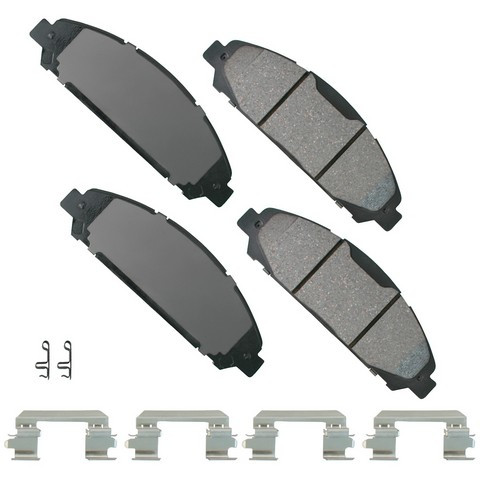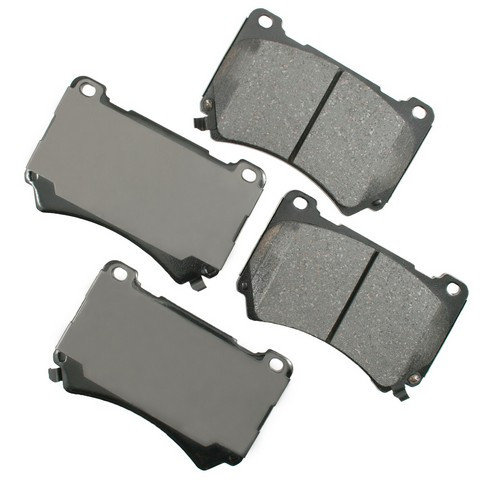
Akebono ProACT Disc Brake Pad Set P/N:ACT2174
Enjoy quiet, low-dust stops with the Akebono ProACT ceramic brake pads (P/N: ACT1396), an ultra-premium front disc brake pad set. It's a direct-fit replacement for the 2011 Hyundai Equus and the 2009-2014 Hyundai Genesis — see the Buyer's Guide tab for engine-specific fitment.
ProACT Ultra-Premium pads use OE-validated, application-specific ceramic formulations built on precision-cut pressure plates with engineered chamfers and slots for controlled braking and NVH (noise, vibration and harshness) management.
Akebono Brake Corporation, the originator of ceramic brake technology, is a leading supplier of advanced brake and friction material with a focus on NVH analysis and control. As a paired wear part, replacing both sides of the axle together as a matched set is recommended for even, balanced braking. This front set installs on the front axle of the listed applications.
This part cross-references / interchanges with the following part numbers:
What vehicles do these Akebono ProACT ceramic pads fit?
They fit the front axle of the 2011 Hyundai Equus and the 2009-2014 Hyundai Genesis. Check the Buyer's Guide tab for engine-specific fitment.
Are these front or rear brake pads?
This is a front disc brake pad set (P/N: ACT1396) for the listed applications.
What makes the Akebono ProACT ultra premium ceramic brake pads different?
They use an OE-validated, application-specific ceramic formulation on precision-cut pressure plates, with engineered chamfers and slots for braking control and NVH management.
Do Akebono ProACT ceramic pads produce less dust?
Compared with conventional semi-metallic pads, these ceramic pads generally produce lower, less-visible dust and run quieter during everyday street driving.
Should I replace both sides at once?
Yes, replacing the pads on both sides of the same axle together as a matched set is recommended for even, balanced braking. This listing covers one set.
WARNING: These products can expose you to chemicals including lead and phthalates, which are known to the State of California to cause cancer and birth defects or other reproductive harm. For more information go to www.P65Warnings.ca.gov.