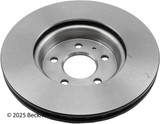
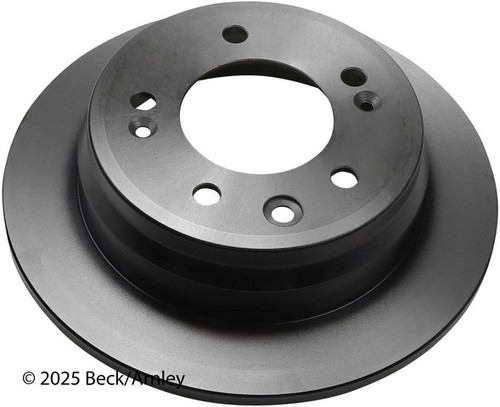
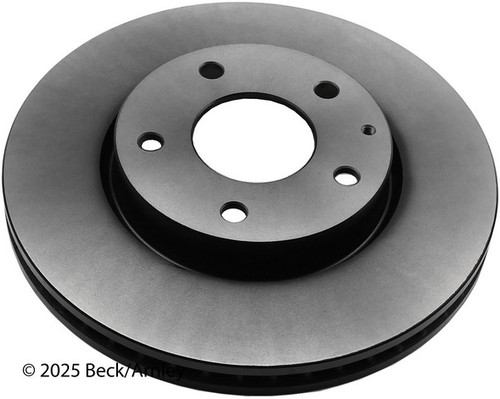
Beck/Arnley Disc Brake Rotor P/N:083-3051

Be the first to review this product
$108.99
MPN: 083-3051
Item Package Quantity: 1
Adding to cart… The item has been added

Have questions?

Beck/Arnley Disc Brake Rotor P/N:083-3051
$108.99

Bring smooth, confident stops back to your Mercedes-Benz with the Beck/Arnley brake rotor 083-3051 (also written 0833051), a front disc brake rotor built to match OE form, fit and function. It installs as a direct-fit front replacement for the 2003-2009 Mercedes-Benz E320 and the 2006-2009 Mercedes-Benz E350 — see the Buyer's Guide tab to confirm your exact vehicle.

The rotor provides the friction surface your brake pads clamp against to slow the wheel, converting motion into heat during every stop.

  • OE form, fit and function: designed as a direct replacement for the original equipment on foreign-nameplate applications.
  • Directional finish: optimizes break-in and pad seating.
  • High carbon content: maximizes thermal conductivity.
  • High-temp coating: applied to exposed surfaces to improve appearance.

This is an application-specific rotor for the listed vehicles. Rotors are sold individually; for even, balanced braking it's best practice to replace both sides of the front axle as a matched pair and to fit fresh pads at the same time. Signs a rotor may need replacing include pulsation through the pedal, vibration under braking, scoring, or grooving of the friction surface.

Frequently Asked Questions

Does the Beck/Arnley brake rotor 083-3051 fit my Mercedes-Benz?

It's a front disc brake rotor cataloged for the 2003-2009 Mercedes-Benz E320 and 2006-2009 Mercedes-Benz E350. Check the Buyer's Guide tab to confirm your exact vehicle.

Is this a front or rear rotor?

It is a front axle disc brake rotor for the listed applications.

How many rotors come in this listing?

Rotors are sold individually. For even, balanced braking it's best practice to replace both front-axle rotors as a matched pair.

What does the high carbon content do?

Per Beck/Arnley, the high carbon content maximizes thermal conductivity, helping the rotor manage heat generated during braking.

What are signs my rotor should be replaced?

Pedal pulsation, vibration under braking, or visible scoring and grooving of the friction surface can indicate a rotor is worn. Have the cause diagnosed before replacing.