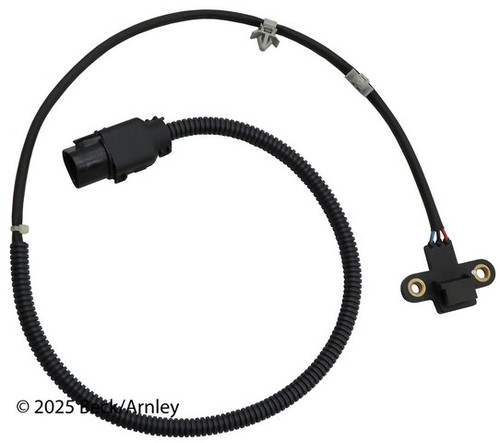
Beck/Arnley Engine Crankshaft Position Sensor P/N:180-0301
Beck/Arnley 180-0333 crankshaft position sensor for the 2000-2002 Hyundai Accent 4-cylinder 1.5L and the 2001-2006 Accent 4-cylinder 1.6L reports crankshaft position to the engine computer. This listing is one sensor, and the engine takes just one.
A worn sensor can show up as hard starting, stalling or a check engine light. Those signs alone do not prove the sensor is at fault, since a weak battery can also make an engine hard to start.
This sensor matches OE form, fit and function, including the strength of the magnet, and it fits the 2000-2002 Hyundai Accent 4-cylinder 1.5L and the 2001-2006 Accent 4-cylinder 1.6L.
Interchange: 5S1776 · 0410037 · CSS1001 · 3918022600 · 3918022600OE · 80223016001 · PC531 · SU5874
This part cross-references / interchanges with the following part numbers:
Is this crank sensor right for the 2001-2006 Hyundai Accent 4-cylinder 1.6L?
Yes. Beck/Arnley 180-0333 fits the 2001-2006 Hyundai Accent 4-cylinder 1.6L, and it also fits the 2000-2002 Accent 4-cylinder 1.5L.
Does the Beck/Arnley crankshaft position sensor have corrosion-resistant terminals?
Yes. Beck/Arnley 180-0333 has corrosion-resistant terminals and coatings, and it is designed for underhood conditions.
Why would an engine stall or start hard with a worn crankshaft position sensor?
The engine computer relies on this sensor's signal for crankshaft position, so a weak or lost signal can lead to hard starting, stalling or a check engine light. A shop can test the sensor.
Does this sensor cross to interchange number SU5874?
Yes. SU5874 is one of the other-brand numbers listed for this sensor, and the rest are on the Interchange line.
Does the magnet in this sensor match the original?
Yes. Its form, fit and function match OE, and that includes the strength of the magnet.
No reviews yet — be the first to review this product.
Write a Review
WARNING: These products can expose you to chemicals including lead and phthalates, which are known to the State of California to cause cancer and birth defects or other reproductive harm. For more information go to www.P65Warnings.ca.gov.