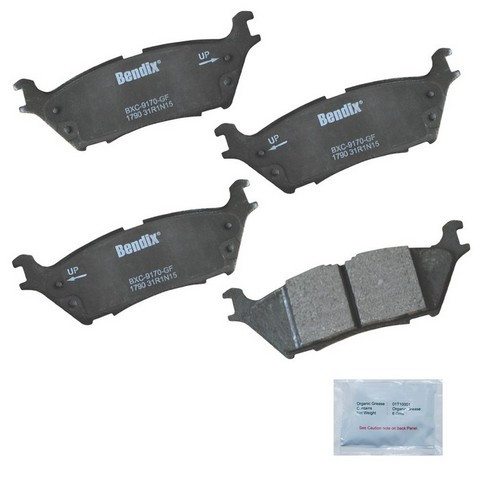
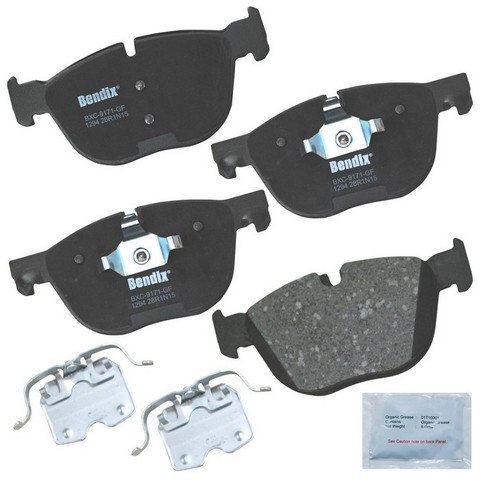
Bring fresh friction back to the front brakes with the Bendix CFC465, a copper-free front disc brake pad set that fits the 1996 Honda Civic, 1990-2002 Honda Accord and 1997-1999 Acura CL. It is a direct-fit replacement for the listed applications and belongs to the Bendix Premium Copper-Free line.
When you press the brake pedal, the caliper squeezes the pads against the rotor. The friction this creates converts the vehicle's motion into heat and slows the car. As pads wear, less friction material is left to do that job, so worn pads are a routine service item. If you are planning a brake pads replacement on a 1990-2002 Honda Accord, these are cataloged for the front position on the listed vehicles.
- Copper-free: Part of Bendix Premium Copper-Free, the brand's range of brake pads and shoes committed to the Copper-Free Initiative in North America.
- Front position: Cataloged for the front brakes on the listed applications.
- Direct fit: Built as a direct-fit replacement for the listed Honda and Acura applications.
- Part number: Bendix CFC465.
Signs your front pads may need replacing include squealing or grinding when braking, longer stopping distances, a brake wear warning, or friction material that looks worn thin. Diagnose the cause before replacing parts. Replacing the pads on both front wheels together is recommended for even, balanced braking. Check the rotors while the wheels are off, and follow the vehicle service information during installation. See the Buyer's Guide tab for full application details.