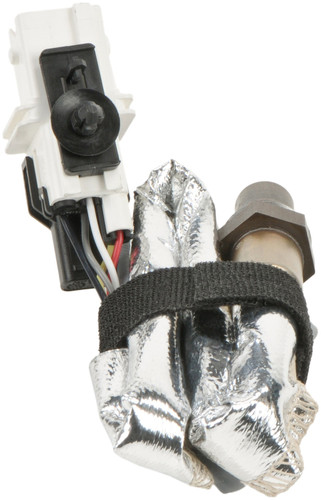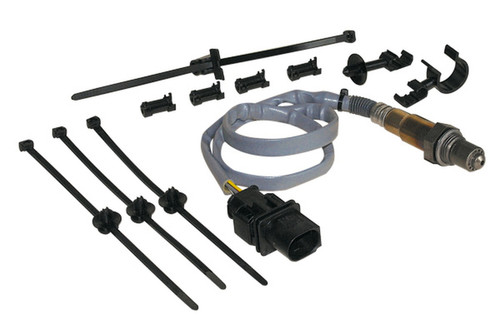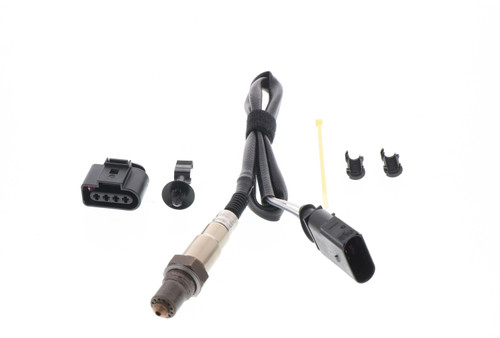
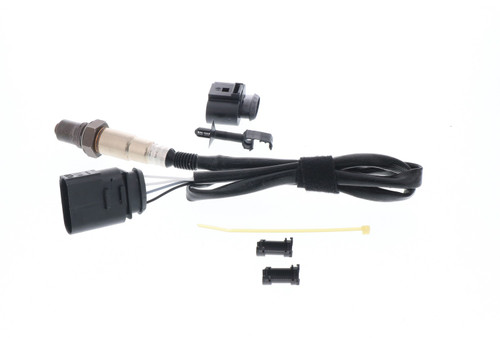
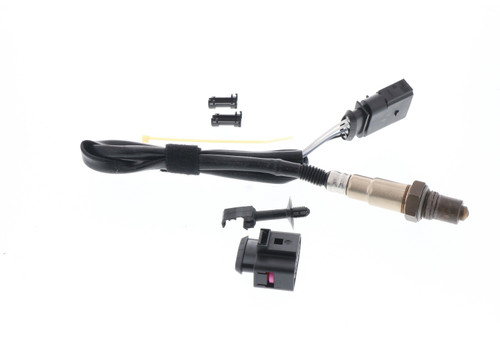
Bosch Oxygen Sensor P/N:13885
Bosch 16034 right oxygen sensor for the 2004-2006 Audi TT Quattro V6 3.2L and other vehicles reports exhaust oxygen content to the ECU. This Bosch premium oxygen sensor is a heated, narrow-band, switching-type unit that gives the ECU air-fuel-ratio readings to help keep combustion stable and reduce emissions.
A failing oxygen sensor can show up as a check engine light, poorer fuel economy or a rough idle. These signs alone do not prove the sensor is the problem, since an exhaust leak near the sensor can give similar readings. The 2005-2006 Audi A4 Quattro V6 3.0L takes two sensors, and this listing is one.
It is listed for a wide range of Audi and Volkswagen models, led by the 2004-2006 Volkswagen Touareg V6 3.2L. If your car is not named here, open the Buyer's Guide tab to check your exact model and engine.
Fit and size
Build and materials
One oxygen sensor with its wiring harness. A mounting bracket is not included.
Is this the right Touareg oxygen sensor for a 2004-2006 Volkswagen Touareg V6 3.2L?
Yes. Bosch 16034 is listed for the 2004-2006 Volkswagen Touareg V6 3.2L as a downstream right sensor.
Is Bosch 16034 an Audi A4 Quattro oxygen sensor for 2005-2006 cars with the V6 3.0L?
Yes. Bosch 16034 is listed for the 2005-2006 Audi A4 Quattro V6 3.0L, which takes two sensors; this listing is one sensor.
How fast does this Bosch O2 sensor reach operating temperature?
Bosch 16034 reaches operating temperature in less than 10 seconds, so the ECU gets a signal quickly and can enter closed-loop control sooner after a cold start.
Does this heated narrow-band oxygen sensor include a wiring harness?
Yes, the wiring harness is included with the sensor. A mounting bracket is not included.
What thread and hex size does this oxygen sensor use?
This downstream right sensor has an M18 - 1.5 thread and a 22 mm hex. Its length from the sealing surface to the end of the connector is 28.3 in.
WARNING: These products can expose you to chemicals including lead and phthalates, which are known to the State of California to cause cancer and birth defects or other reproductive harm. For more information go to www.P65Warnings.ca.gov.