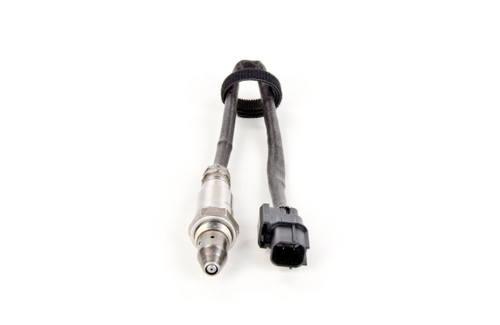
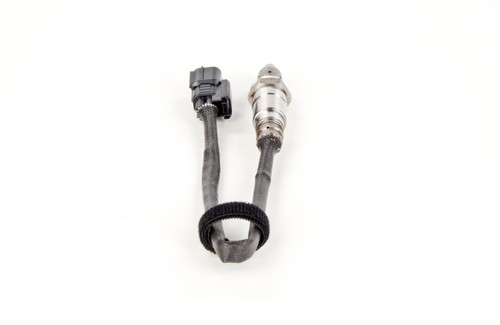
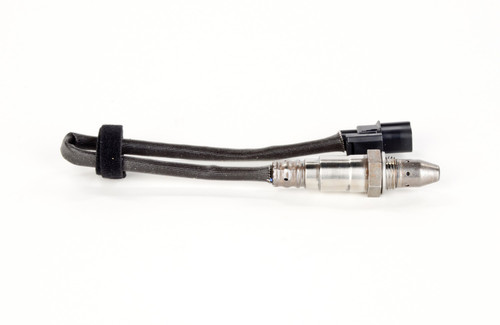
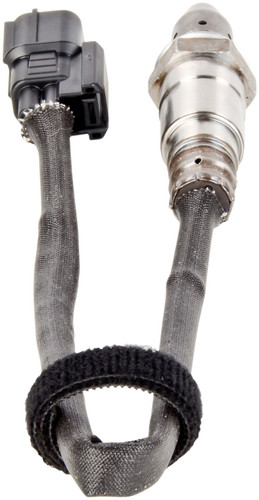
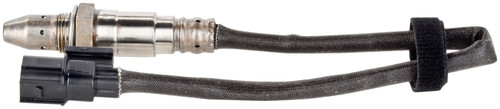
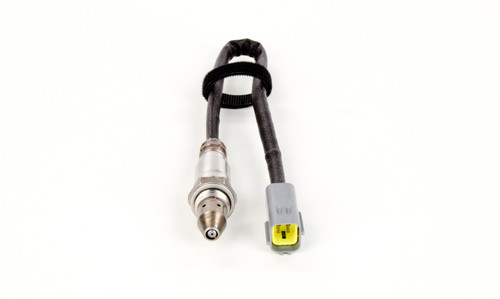
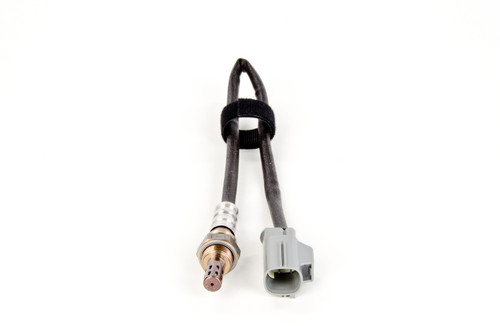
Bosch 18064 oxygen sensor for the 2008-2017 Honda Accord 4-cylinder 2.4L and other vehicles reads the air-fuel ratio and reports it to the ECU. It is a heated wide-band sensor for the upstream position, so the ECU gets more detailed data than a switching sensor provides.
- Wide-band design that measures the air-fuel ratio across the full lambda range
- Reaches operating temperature in less than 7 seconds for quick closed-loop control
- Metal housing with an integrated heater element and TSP coating to resist vibration, corrosion and contamination
- Withstands exhaust gas temperatures up to 1,880°F
- Pre-applied conductive anti-seize on the threads for quick installation
Quick facts
- Part: Bosch 18064 oxygen sensor
- Fits: 2008-2017 Honda Accord 4-cylinder 2.4L and other vehicles
- Position: Upstream
- Material: Metal housing
- Condition: New
A check engine light, a rough idle or lower fuel economy can mean an oxygen sensor is worn. Those signs alone do not prove it, since a vacuum leak, for one, can also set off the light, so find the cause first.
Fits
This oxygen sensor is listed for a wide range of Honda and Acura models, including the 2012-2015 Honda Civic 4-cylinder 1.5L or 2.4L and the 2010-2019 Honda CR-V 4-cylinder 2.4L. If your car is not one of these, look up your own year and engine in the "Vehicles it fits" section.
Specifications
Fit and size
- Position: Upstream
- Quantity per vehicle: 1
- Thread size: M18 - 1.5
- Hex size: 22 mm
- Overall length: 15.0 in
- Length, sealing surface to end of connector: 13.8 in
- Wiring harness length: 11.5 in
- Wires and terminals: 4, male blade terminals
Build and materials
- Sensor type: Wide-band, heated
- Housing material: Metal
- Connector: Rectangle, male
- Wiring harness: Included
- Condition: New
- Warranty: Bosch 1-year, unlimited-mileage warranty for non-commercial passenger cars and light trucks
- Country of origin: Japan
In the box
One oxygen sensor with its wiring harness; a mounting bracket is not included. This listing is one sensor, and the vehicles it is listed for take one.
Frequently Asked Questions
Is this a 2008-2017 Honda Accord oxygen sensor for the 4-cylinder 2.4L engine?
Yes. Bosch 18064 is listed for the 2008-2017 Honda Accord 4-cylinder 2.4L as the upstream wide-band sensor, one per car.
Is this Bosch O2 sensor a wide-band or a narrow-band type?
It is a heated wide-band sensor for the upstream position. It has four wires, an M18 - 1.5 thread and a 22 mm hex.
Does the Bosch 18064 come with a wiring harness?
Yes, the wiring harness is included, and it is 11.5 in long. A mounting bracket is not included.
Is this Bosch premium oxygen sensor covered by a warranty?
Yes. Bosch gives it a 1-year, unlimited-mileage warranty for non-commercial passenger cars and light trucks.
Do I need to add anti-seize to this oxygen sensor's threads?
No. Conductive anti-seize comes pre-applied to the threads, and the connector is direct-fit for quick installation.