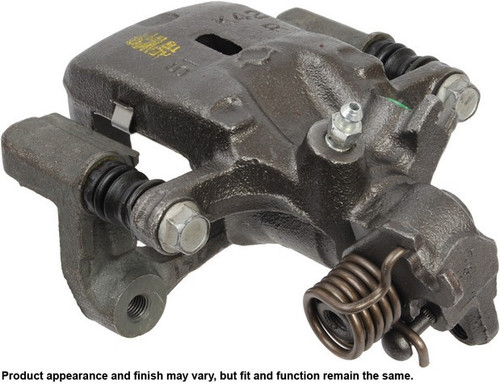
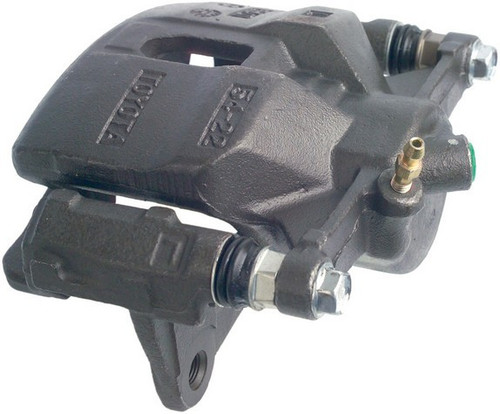
When the front left caliper is leaking, sticking or seized, the A1 CARDONE 19-B1461 remanufactured disc brake caliper is built to take its place. It arrives unloaded, with the mounting bracket included. It fits many vehicles, among them the 1997-2001 Honda CR-V, 1991-1997 Honda Accord and 1995-1998 Honda Odyssey. See the Buyer's Guide tab for the full list and engine details.
This A1 CARDONE caliper is remanufactured from an original equipment unit to CARDONE's quality and performance standards and fitted with new components. Every unit is 100% pressure-tested.
- Pistons: durable, resistant to cracking and pitting, and built to handle heavy loads.
- Seals: the rubber seals are replaced with new high-temperature EPDM rubber.
- Finish: treated with a specially formulated rust inhibitor and kept in the original equipment finish.
- Hardware: new bleeder screws for easy bleeding and a positive seal, plus a plastic cap plug over the brake port thread. New banjo bolts, washers, stainless steel hardware clips and mounting pins are included where applicable.
It is sold individually for the front left position. Replacing both calipers on the axle together is recommended for even, balanced braking. CARDONE's remanufacturing process is earth-friendly: it cuts the energy and raw material needed to make a new part by 80%.
Signs a caliper may need replacing include:
- brake fluid leaking at the caliper
- pulling to one side under braking
- a dragging or sticking brake
- uneven pad wear
Other brake faults can cause the same symptoms, so diagnose the cause before replacing the caliper.
Interchange: 45019SW5003 · 45019SM5000 · 45019SM5000RM · 45019SS0A00RM · 45019SS0A01 · 45019SW5003RM · 45019SW5A03RM · 45230SM5A01 · 45230SS0A01
This part cross-references / interchanges with the following part numbers:
45019SW5003, 45019SM5000, 45019SM5000RM, 45019SS0A00RM, 45019SS0A01, 45019SW5003RM, 45019SW5A03RM, 45230SM5A01, 45230SS0A01